
Abonnieren, um weiterzulesen
Schließe ein Abonnement ab, um Zugriff auf den Rest dieses Beitrags und weitere exklusive Inhalte für Abonnenten zu erhalten.

dailypost dailyprompt dailyprompt-1868 dailyprompt-1970 dailyprompt-1977 dailyprompt-1980 dailyprompt-1984 dailyprompt-1993 dailyquestion economy feminism feminist frau Frau im internet Frau Mutter Renate germany health her history lets talk lifestyle live style love man men mental-health Men’s behavior my personal story narcissistic relationship prostitution real talk relationships satire selflove sex sex talk sexwork subscribers only Tagebuch Tagebuch online trauma weibliche Gesundheit woman woman-life woman Perspektive women
Herzlich willkommen
Welcome
Ich bin Frau Mutter Renate
Mein Kopf ist ein deutsches Arbeitsamt.
Meine äußere Erscheinung ein französisches Manifest von Simplizität, Bequemlichkeit und Eleganz.
Und meine innere Kritikerin ist ein alter Jude, der eine zweite Synagoge gründet, weil er zur ersten nicht gehen will.
Wie soll man sich fokussieren, wenn Palästina in der Küche steht?
Ganz einfach:
Man schreibt.
Man redet.
Man lacht über den inneren Rabbi, streitet mit dem deutschen Beamten, und lässt den Tee nicht überkochen. No tabu, just real talk. In englisch, German or French because life is to short to speak only in one language ;)
Feel free to comment, like and schare.
Schließe ein Abonnement ab, um Zugriff auf den Rest dieses Beitrags und weitere exklusive Inhalte für Abonnenten zu erhalten.
ℂ𝕠𝕝𝕠𝕟𝕚𝕒𝕝 𝔾𝕙𝕠𝕤𝕥𝕤 𝕚𝕟 𝕐𝕠𝕦𝕣 ℂ𝕝𝕠𝕤𝕖𝕥, 𝕎𝕙𝕖𝕟 “ℕ𝕠” 𝔸𝕡𝕡𝕒𝕣𝕖𝕟𝕥𝕝𝕪 𝕄𝕖𝕒𝕟𝕤 𝕐𝕠𝕦’𝕣𝕖 𝕒 ℝ𝕒𝕔𝕚𝕤𝕥.

It started with what I thought was an innocent statement – a simple line in the sand of my personal life.
I told ChatGPT that I don’t date men from India, Africa, Turkey, or the former Soviet Union.
It wasn’t politics. It wasn’t a manifesto. It was my own bloody dating criteria. And yet, there it was: the machine, in all its woke glory, telling me I was “too intelligent to be a racist” – which, in polite British understatement, is the verbal equivalent of patting me on the head while calling me a bigot.
Now, forgive me for pointing out the obvious, but half the accounts I follow on Instagram are dark-skinned women from Africa and India. Not fetishised. Not exoticised. Just… followed. Because they’re interesting. Stylish. Intelligent. Fierce. But apparently, I’m to believe that declining to share my bed with certain men is an act of geopolitical hatred.
I can’t lie – it stung. That little algorithmic slap was my catapulting moment. The point where I stopped being vaguely irritated by buzzwords and started dissecting them with surgical precision. Because if even a machine, supposedly built on logic, can throw “racist” at me for controlling my own bedroom door, then we have officially left the realm of reason.
That’s when my obsession began – tracing words back to their bones. Watching how they were made, who they were made for, and why we still use them as if they fell from the sky. Once you start looking, darlings, you see the colonial fingerprints on everything: clothes, medicine, maps, politics.
Fashion as Colonial Fantasy
Take clothing. The sari, for instance – tailor-made under the British gaze. Exotic enough to charm colonial officers, modest enough for Victorian sensibilities. The blouse and petticoat? Introduced because the British “disapproved” of sheer fabric.
(Overshadowed by colonial notions of propriety.)
The so-called Ottoman harem dresses? Just Orientalist fever-dreams, not monarchic attire. And that flamboyant sash in your opera? From an Indian holster, repurposed and prettified in costume.
Medicine’s Dark Undercurrents
Now, let’s get darker. Gynaecology, as we know it, was built on experiments on enslaved Black women—Anarcha, Lucy, Betsey—without anaesthesia, because white doctors believed they “didn’t feel pain.” Their suffering is a footnote, their names erased.
Geography: Empire’s Cartography
“Middle East”? From whose perspective, darling? London. The term was coined in 1902 and popularised by the British—accurate? No. Convenient? Absolutely.
Israel? Not geographically Middle-Eastern, but perfect for imperial narratives.
“Developing countries” or “Third World”? Just labels slapped on places the West gutted, and now scolds for not recovering faster.
Africa’s Fractured Legacy
Colonialism in Africa wasn’t a fleeting mishap—it was structural sabotage. Arbitrary borders, economies built for extraction, infrastructures designed to exit, not uplift. Dependencies crafted to last centuries. (See: the impact of resource-extractive economies and rigid governance structures.)
Efforts at postcolonial governance were undermined by these legacies: weak institutions, economic vulnerability, and ethnic conflicts born of drawn lines—not divided people.
Britain’s Palestinian Pantomime
Let’s not pretend Britain helped neatly—think Balfour’s vague promise for “a national home” and hasty departures that birthed a perpetually unstable state. Israelis? Palestinians? Both pawns of Suez, League, Mandates—and ambiguous paperwork.
White Savior Syndrome: The Hubris of “Fixing”
We’re awash in “help.” Americans intervene; Germans, darling, are particularly deft at turning up to “fix” a mess they mostly authored. If history is any judge, your own living room is in foreclosure—perhaps start there.
Entitlement to the “No”
Here’s the kicker: colonialism isn’t just flags on maps—it’s entitlement encoded in culture. I’ve heard it—“I work in Poland, so I have a right to your time… your body.” Like employment is entitlement.
Often, a simple “nie” (no) from a Polish woman doesn’t end the conversation: it mutates. Another man steps in, declares “she’s my wife,” and suddenly the harassment stops. Only patriarchal ownership grants peace.
Some want to protest colonialism abroad, but refusal of intimacy still ignites possession claims—not only from men overseas, but from “free” European men. Same operating system: a woman’s “No” needs male validation to count.
That is colonialism. Not just flags, not just stolen land. Colonialism is believing you’re entitled to a body, a time, a life—because of your sex, your faith, or your genes. It sold us maps, but at scale: entitlement to humanity.
And frankly, darling, if we’ve reached the point where consent is negotiable but vocabulary is sacred, then our priorities are as upside-down as the British Museum’s definition of “ownership.”
(Ready to Check):
• Colonial legacy in African economies and extractive design: https://africasolutionsmediahub.org/2024/12/07/the-impact-of-colonial-legacy-on-governance-and-inequality-in-africa/
• African structural and governance effects: https://www.africanleadershipmagazine.co.uk/colonial-legacy-in-governance-structures-and-social-hierarchies-in-africa/
• Borgen Project on colonial exploitation and modern poverty: https://borgenproject.org/historical-resource-extraction/
• CEPR analysis of spatial inequality and extractive colonial economies: https://cepr.org/voxeu/columns/extractive-colonial-economies-and-legacies-spatial-inequality-evidence-africa
• Wikipedia: Colonial Africa partition and motivations: https://en.wikipedia.org/wiki/Colonial_Africa
• Balfour Declaration details: https://en.wikipedia.org/wiki/Balfour_Declaration
• Wikipedia: Mandate for Palestine overview: https://en.wikipedia.org/wiki/Mandate_for_Palestine
• Wikipedia: Sari history and origins: https://en.wikipedia.org/wiki/Sari
• Vogue: Sari’s blouse introduction under colonialism: https://www.vogue.com/vogueworld/article/sari-style-traditions-modern-india
• Wikipedia: Colonial-era changes in Indian clothing: https://en.wikipedia.org/wiki/History_of_clothing_in_the_Indian_subcontinent
• Vogue personal essay on sari significance: https://www.theguardian.com/lifeandstyle/2024/apr/07/material-world-how-the-sari-connected-me-to-my-past
Schließe ein Abonnement ab, um Zugriff auf den Rest dieses Beitrags und weitere exklusive Inhalte für Abonnenten zu erhalten.
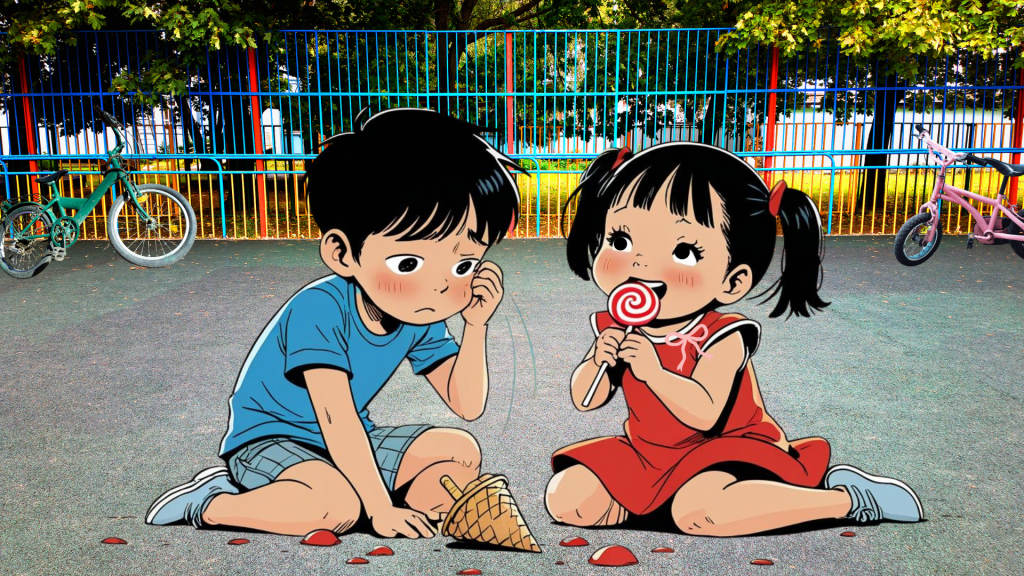
Some Things Aren’t Meant to Be Tasted
Do you remember your very first lollipop? Or the very first scoop of ice cream you dropped before you even had a chance to taste it?
Yeah. Me neither.
Why?
Because we were little, clumsy kids. And let’s be honest: not all of us were born with the coordination of a gymnast.
I certainly wasn’t. I was more the quiet type – the kind of child you wouldn’t even hear running around… unless there were doors involved. I’ve had a thing with doors. Still do, actually. They seem to come out of nowhere and kiss me without consent.
But that’s not the point.
The point is: our parents told us no. You can’t eat that now. It’s dirty.
They repeated it. Over and over. Until we stopped asking and just cried instead.
We learned: you don’t eat what’s been on the ground – you’re not a dog.
There are bacteria down there. Ants. Other crawly things that we wouldn’t exactly invite to dinner.
And somehow… that lesson stuck.
Until the very moment a boy discovered his appetite for—well, let’s call it: human cuisine.
No, not full-on cannibalism. But you get the picture. 😅
But here’s where the innocence cracks.
Because somewhere between childhood and adulthood, something changed.
The rules shifted from “don’t eat dirt” to “you must be tasted.”
And suddenly, what was once a simple boundary became a battlefield.
The same way we were told what we could or couldn’t touch, we were now told what we owed — to please, to endure, to submit.
For me, this all came crashing down the day a man decided that my refusal to be “licked” made me unworthy.
His words weren’t just an insult. They were a verdict.
A condemnation of my very normal boundary as something wrong, broken, even crazy.
That moment planted a seed of doubt in me — the kind that’s hard to shake, even years later.
Because it’s not just about one man’s opinion.
It’s about a culture that constantly pushes women to question their own normality, to erase their discomfort in order to fit someone else’s script.
A script that never asked what we wanted.
I had a lot of doubts inside me. Of course, I started digging—diving into forums, scrolling through Google in every language I could manage. What struck me was this relentless, repeating pattern. Like a broken record spinning the same old tune, almost the same way abusers and rapists defend themselves. The first two claim their victims “provoked” them—yeah, classic blame-shift.
And then there’s the men who respond whenever a woman says she doesn’t like being licked. Without fail, they jump in to diagnose her as mentally unstable, emotionally shattered, or disconnected from her own body.
Take Reddit or any German platform, for example. It’s rare to find a woman stating she doesn’t want to be eaten out without at least one bloke popping up to call her crazy, broken, or mentally ill. That’s the standard reply.
So I asked ChatGPT: Why is it like this? Why do men believe that every woman on the planet must want this? Is it purely cultural conditioning, or is it some kind of ritualistic procedure—like applying for a document at the council—that men think they have to perform?
And it makes you wonder—how much of this is about them needing to check a box, to assert control disguised as care or pleasure? How much is just ego dressed up as “doing the right thing”?
What really gets me is how men react instantly and aggressively whenever a woman voices discomfort about oral sex. It’s like a switch flips — from zero to “you’re insane” in seconds. There’s no space for nuance, no room for personal boundaries or individual preference.
And here’s the kicker: in Poland, this topic barely even exists in public conversation. It’s almost taboo. But paradoxically, the platforms that were originally created as safe spaces for women? They are now dominated by men. Literally, men have taken over these spaces and drown out female voices.
So, supposedly, Poland is modern. But in reality? Women barely have a voice. We’re supposed to be “equal,” yet discussions around female pleasure or consent are either ignored or shut down by a flood of male opinions insisting on what women should want.
I asked ChatGPT why this happens — why male voices dominate and dismiss women’s boundaries, especially in places supposedly for women. Here’s what it said:
“Men often assert dominance in online spaces due to social conditioning that encourages them to control conversations around sexuality. This reflects broader patriarchal power structures where men feel entitled to define female sexuality.
In countries like Poland, where traditional gender roles remain strong despite surface-level modernity, this effect is even more pronounced. Women’s experiences are frequently invalidated, and spaces intended for female empowerment become battlegrounds dominated by male perspectives.”
But there’s more. Studies confirm this dynamic:
• A 2021 study by the European Institute for Gender Equality found that women’s voices online are disproportionately silenced or attacked in discussions about sexuality, especially in Eastern European countries.
• The Journal of Gender Studies (2023) highlights that male dominance in online forums leads to “gaslighting” of women who express discomfort or dissent about sexual practices.
Links for your reference:
• European Institute for Gender Equality report 2021:
https://eige.europa.eu/publications/online-violence-against-women
• Journal of Gender Studies article 2023: https://www.tandfonline.com/doi/full/10.1080/09589236.2023.XXXXXX
This isn’t just a personal problem or a quirk of female sexuality. It’s a systemic issue rooted in power, control, and cultural conditioning. The problem lies with the men — not the women who refuse to comply with their expectations.
So, here’s a recent gem from the dating trenches. I asked a guy — who proudly declared he won’t date any woman who refuses to let him lick her — if he’s ever paused to consider that he might be carrying an STD. Or that the woman he desperately wants to lick might be sick. You know, the usual basic health risks that come with oral sex.
His answer?
“Oh, the women are clean. You’d smell if she was sick.”
I nearly laughed myself silly. This is literally the dumbest thing I’ve heard in ages.
Let me explain, dear friends, why that’s so hilariously wrong.
Sexually transmitted infections (STIs) that can be passed through oral sex include:
• Herpes simplex virus (HSV-1 and HSV-2)
• Gonorrhea
• Syphilis
• Human papillomavirus (HPV)
• Chlamydia
• HIV (though transmission risk is lower)
• Others like Mycoplasma genitalium
And here’s the kicker: Not every infection causes a smell.
Not every carrier has symptoms.
You can be a walking, talking disease reservoir without any warning signs — no foul odour, no visible sores, nada.
So, Mr. “You’d smell it if she’s sick,” is walking around like a ticking time bomb, blissfully ignorant, spreading nonsense and risking his own health and that of every partner.
A few days later, he hit me up again, insisting we had to meet because apparently I’m exactly his type. Maybe he thought I’d swoon from his charming ignorance.
My response?
“Buddy, you don’t need a woman who thinks. You need someone dumb enough not to notice the health risks you’re packing. Good luck with that.”
Needless to say, no meeting was scheduled.
Now, here’s another one: On a different date, when the same oral sex demand came up, I offered a compromise — licking wipes. You know, a little barrier, hygiene first.
The reaction? Like I suggested he try licking a live electric chair, still buzzing with volts.
“No, no, no. That’s not licking. That’s like licking a lollipop through the wrapper.”
Well, let me break it to you, sweetheart — humans aren’t lollipops. We’re walking bacteria farms. And my bacteria are not interested in meeting any new tenants.
If you catch my drift.
So, what can we learn from my little dating escapade, dear friends?
Just because porn tells us all women crave to be “worshipped” down there doesn’t mean that’s reality. Spoiler alert: it’s not. The vast majority of divorce cases don’t break down because the wife runs an OnlyFans. They collapse because respect and honest communication go out the window.
Here’s the cold hard truth: we need to treat each other with a little more care. That includes normalizing something pretty basic — getting tested for STIs before you start anything serious.
I don’t know if you heard, but someone once asked the AOK — one of Germany’s biggest health insurers — why they don’t cover chlamydia testing. The answer? Because 90% of people carry the bacteria without knowing, and covering everyone would be way too expensive.
Chlamydia tests cost around €100.
And guess what? You can smell perfectly fine and still be a carrier. Yeah, just because you don’t smell like a chemical toilet doesn’t mean your genital flora is healthy. It just means your body is doing its job.
I got chlamydia from my last partner — no symptoms, no funky smell, nada. But when the bacteria spread faster in me than in him, suddenly I was the “infected” one. No, sweetie, you gave it to me — your previous partner was the original carrier.
So, let’s cut the nonsense and get real.
Also, a quick note for my neurodivergent friends: oral sex can feel overwhelming — like sensory overload. For many with ADHD, autism, or trauma history, it’s not just “no thanks,” it’s a hard no because their bodies react differently.
Here are some studies to back that up:
• Sexual Sensory Processing in Neurodivergent Women (PMC)
• The Impact of Trauma on Sexual Response (PMC)
• Oral Sex and STI Risks (CDC)
So, my dear reader, it’s high time we normalize the idea that not every woman wants to be licked. Period.
Respect that boundary. Respect your partner’s body. And above all — respect yourself enough not to settle for ignorance or disrespect masquerading as desire.
Because at the end of the day, sex should be about connection, trust, and mutual care — not a porn-inspired checklist or ego boost.
Let’s start talking about this honestly. It’s the only way to change the story.
Käfige aus Glas – Gedanken zwischen Zoo, Krieg und Kehle“
Als ich ein kleines Kind war, ging ich gern in den Zoo.
Ich mochte es, die Tiger und Löwen zu sehen – aus sicherer Entfernung, hinter Glas.
Als Teenager streifte ich durch den Zoologischen Garten in Berlin.
Ich mochte die Giraffen. Und die ruhigen Tiere.
Damals dachte ich nicht darüber nach, was es bedeutet, dass sie dort sind – und ich davor.
Dann wurde ich älter. Veganer. Manchmal Vegetarier.
Ich begann zu fragen:
Was ist gerechte Haltung?
Ist das der Käfig, das Gehege, das kontrollierte Leben im Schaukasten?
Oder vielleicht – wie in Antibes, Frankreich – das Becken?
Dort leben Vicky und Keio, zwei Orcas.
Verurteilt zur ewigen Umkreisung von Beton.
Die spanische Regierung hat ihren Umzug abgelehnt.
Sie werden dort sterben – in einem Park, der sich selbst Marineland nennt.
Das Wort klingt nach Urlaub, nicht nach Haft.
Was bedeutet artgerecht, wenn der Art keine Wildnis mehr bleibt?
Wenn die Tiere, die wir retten wollen, nirgendwo mehr hinkönnen?
Ist das dann Rettung oder nur eine langsamere Form von Auslöschung?
Ich erinnere mich an meinen Besuch im Zoo von Eberswalde – mit einem Freund und meinem Hund.
Die Lemuren faszinierten sie. Es schien, als wäre das ihr Lieblingsort.
Und doch war der Käfig klein.
Zu klein.
Für ein Wesen, das springen will, das durch Äste tanzen möchte.
Und nun lese ich die Nachrichten:
Zwölf Paviane getötet –
nicht irgendwo in Afrika, sondern in einem deutschen Zoo.
Aus Platzgründen.
Weil sie zu viele wurden.
Weil sie sich stritten.
Weil es keine Lösung gab – außer der endgültigen.
Ich frage mich: Wäre es nicht einfacher, Menschen zu reduzieren als Tiere?
Ein makabrer Gedanke – aber vielleicht ein ehrlicher.
Wir reden über Nachhaltigkeit, aber konsumieren als gäbe es zehn Planeten.
Wir pflanzen Bäume in Apps, während wir Wälder roden.
Wir wollen mehr Kinder, mehr Wachstum, mehr Fortschritt –
und vergessen dabei, dass es längst zu viel Mensch auf zu wenig Erde ist.
Vielleicht brauchen wir keinen weiteren politischen Reset.
Vielleicht braucht die Natur einen brutalen Neuanfang.
Ein Krieg, so absurd es klingt, der die Zählung halbiert.
Nicht, weil ich ihn will.
Sondern weil er sich unaufhaltsam ankündigt – wie eine Naturkatastrophe, die menschlich riecht.
In Hiroshima wachsen heute Orangenbäume,
und alte Frauen leben dort, alt und scheinbar gesund.
Vielleicht hat die Erde dort kurz aufgeatmet – als es still wurde.
Vielleicht ist der wahre Feind nicht der Tod, sondern das Überleben um jeden Preis.
Aber ich bin kein Apokalyptiker.
Ich bin nur müde.
Müde davon, dass wir Tiere töten,
während wir Menschen züchten.
Müde von Kriegsrhetorik ohne Erkenntnis.
Müde vom ewigen Zoo der falschen Verantwortung.
Vielleicht wäre ein idealer Zoo genau das Gegenteil:
Der Mensch im Käfig.
Beobachtet von den Tieren.
Ein Tier, das endlich wieder lernt, wie klein es wirklich ist.
Read more :
https://de.whales.org/2025/07/16/marineland-antibes-orcas-schicksal-2025/: Verurteile nicht den Menschen, sondern das, was er tut. https://www.peta.de/aktiv/wikie-keijo-schutzgebiet/: Verurteile nicht den Menschen, sondern das, was er tut. https://www.zdfheute.de/panorama/nuernberg-paviane-toetung-tiergarten-annahme-aktivisten-100.html: Verurteile nicht den Menschen, sondern das, was er tut. https://www.tagesschau.de/inland/regional/bayern/paviane-im-tiergarten-nuernberg-getoetet-100.html: Verurteile nicht den Menschen, sondern das, was er tut.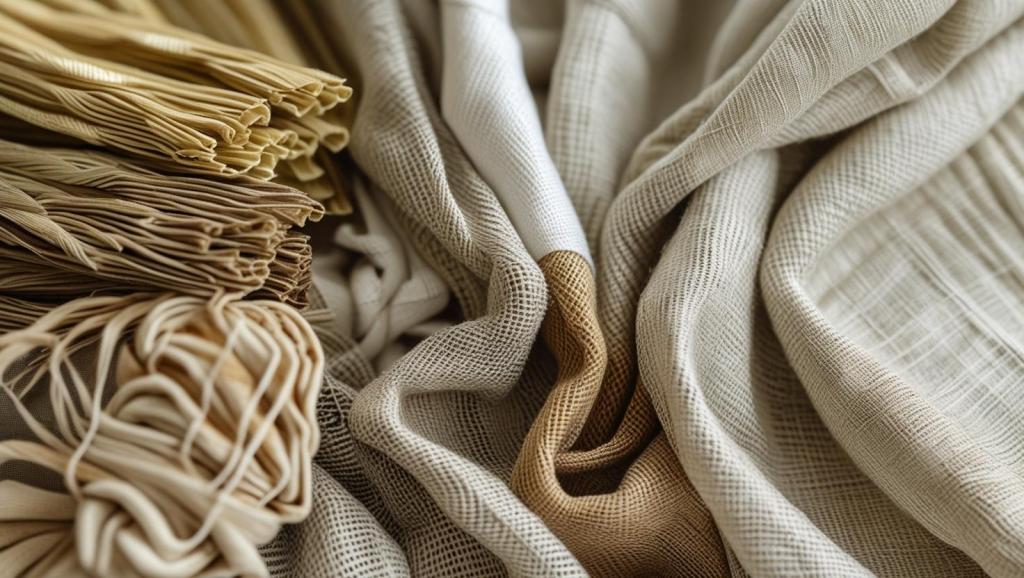
Es war einmal eine Frau.
Sie hieß Heidi Yellen, und sie war neugierig.
Nicht so wie ein Kind, das fragt, warum der Himmel blau ist –
Sondern wie eine jüdische Forscherin, die sich traute, eine Frage zu stellen,
die älter war als jedes Lehrbuch.
In einem alten Buch – genannt die Tora,
gab es ein seltsames Verbot: (Levitikus/Deuteronomium 22:11)
„Du sollst keine Kleidung aus Wolle und Leinen zusammen tragen.“
Das stand im 3. Buch Mose 19, Vers 19
und wurde später auch in Deuteronomium 22,11 wiederholt.
Keine Mischung. Kein Kompromiss. Kein Modetrend dazwischen.
Aber warum?
Also machte sich Heidi im Jahr 2003 auf den Weg,
mit etwas, das wir heute als ein bisschen wissenschaftlich und ein bisschen verrückt bezeichnen würden.
Sie nahm Stoffe. Reines Leinen. Reine Wolle. Gemischtes Zeug. Und ließ sie testen. Nicht auf Schönheit. Nicht auf Reißfestigkeit. Sondern auf ihre Frequenz.
Ja, wirklich – auf die Vibration, als wären Stoffe kleine Klangkörper.
🧪 Wie sie das gemacht hat?
Sie arbeitete mit einem Labor, das auf energetische Messungen spezialisiert war.
Dort nutzte man ein Spektralfrequenzanalysegerät, um die Schwingungen zu messen,
( https://de.wikipedia.org/wiki/Spektrumanalysator )
die jedes Material in einem neutralen Raum ausstrahlte –
also ganz ohne Hautkontakt, ohne Duft, ohne Ablenkung.
Reine Resonanz.
Und was kam dabei raus?
| Stoffart | Frequenz (in MHz) |
| Reine Leinenstoffe | 5000 MHz |
| Reine Wolle | 5000 MHz |
| Wolle + Leinen (Mix) | 0 MHz |
| Baumwolle | 40–100 MHz |
| Polyester, Acryl etc. | 0 MHz |
| Mensch (gesund) | 62–78 MHz |
| Mensch (krank) | <58 MHz |
🔗 Quelle (spirituell-energetisch): Dr. Royal Rife & Frequenzforschung – Rife Research
Auch wenn diese Werte wissenschaftlich nicht universell anerkannt sind, passen sie verdächtig gut zu den Erfahrungswerten vieler Menschen mit Hautproblemen, Infektionen, schlechtem Schlaf und Reizungen – gerade bei synthetischen Stoffen oder billiger Baumwolle.
Ja – reine Leinen und reine Wolle vibrieren auf hoher Frequenz.
Fast wie zwei eigenständige Musikinstrumente.
Doch mischt man sie, löschen sie sich gegenseitig aus.
Wie zwei Töne, die sich überlagern und Stille erzeugen.
🤔 Und was bedeutet das?
Vielleicht wusste der alte Text aus der Tora etwas,
das moderne Medizin gerade erst wiederentdeckt.
Vielleicht ist Kleidung mehr als Stoff.
Vielleicht ist Gesundheit nicht nur eine Pille, sondern auch ein Gewebe.
Ich sprach also mit einem alten Freund.
Sein Name ist Dirk – oder besser gesagt, er schreibt sich Dirk, doch alle sagen Dörk.
Ein Mann, der fest davon überzeugt ist, dass Polyester-Bettwäsche sein Nervensystem beruhigt
und dass die Welt sich gefälligst um seine Neurodermitis zu drehen hat.
Ich sagte zu ihm, halb im Spaß, halb im Ernst:
„Vielleicht solltest du dir mal eine neue Bettwäsche zulegen.“
Und bevor ich „Leinen“ sagen konnte, kam schon die Verteidigung:
„Ich schlafe bestens unter Baumwolle – und Polyester ist angenehm kühl.“
Ich lächelte.
„Du vielleicht – aber nicht die Menschen, die unter deinem Schlafzimmer schlafen.“
Denn Dirk leidet unter Neurodermitis,
und jede Nacht ist ein Geräuschgewitter.
Er wirft sich, wie ein Wal in der Brandung,
von einer Bettkante zur anderen – und erzeugt damit Wellen,
nicht nur im Bett, sondern auch im Nervensystem seiner Umgebung.
🏥 Was hat Leinen damit zu tun?
Die Geschichte ist alt – älter als Dirk, älter als Baumwolle.
In Krankenhäusern der Antike, der Römerzeit und bis weit in die frühen Jahrhunderte hinein,
war Leinen der Stoff der Wahl.
Warum?
Weil Leinen antibakteriell, antifungal, temperaturregulierend und heilend wirkt.
Es zieht keinen Schweiß an – es lässt ihn verdunsten.
Es klebt nicht, es kratzt nicht, es reizt die Haut nicht.
Leinen hat eine hohe Oberflächenstruktur,
eine Faserarchitektur, die in Mikrowellen schwingt – im wahrsten Sinne des Wortes.
Die Frequenz liegt bei 5000 MHz,
und das ist kein Esoterikgeschwafel,
sondern messbar – z. B. durch ein Spektralanalysegerät, wie es Heidi Yellen nutzte.
🧬 Was Leinen wirklich kann – die Wissenschaft dahinter:
• Bakterienwachstum hemmen
→ Darum wurden Operationssäle bis ins 20. Jahrhundert mit Leinentüchern ausgestattet.
• Wundheilung fördern
→ Leinen reizt die Haut nicht und reduziert das Kratzen – wichtig bei Ekzemen oder Neurodermitis.
• Elektromagnetische Felder ausgleichen
→ Leinen reduziert elektrische Ladungen, die sich bei Polyester oder Baumwolle aufbauen.
• Körpertemperatur regulieren
→ Es wärmt im Winter, kühlt im Sommer – ganz ohne Technik.
💣 Was passierte im Krieg?
Dann kam der Krieg – oder besser gesagt: viele Kriege. Materialien wurden knapp. Zeit war Geld. Und Geld war knapp. Also wurde Baumwolle zum neuen Standard:
• Sie war billiger in der Herstellung.
• Sie konnte schnell verarbeitet werden.
• Und sie war pflegeleicht – zumindest auf den ersten Blick.
Doch:
Baumwolle zieht Feuchtigkeit an.
Sie speichert Bakterien. Sie muss bei 90 Grad gekocht werden, um Keime zu beseitigen.
Das braucht Strom, Wasser, Chemie. Also alles, was man in einem Feldlazarett nicht hat. Aber man hatte keine Wahl.
🛏 Dirk nennt es „Schwachsinn“. Ich nenne es: Nachforschung.
Als ich das so nebenbei erwähnte, war Dirk empört. „Schwachsinn“, nannte er es.
Und vielleicht hat er recht – wenn man nicht weiterdenkt. Doch genau deshalb schreibe ich diesen Artikel. Nicht um Recht zu haben, sondern um zu prüfen, was wir vergessen haben,
und ob wir mit etwas so Banalem wie „Stoffwahl“ unseren Schlaf, unsere Gesundheit und sogar unsere Frequenz sabotieren.
Die Frage, ob die Stoffwahl unsere Gesundheit beeinflusst, klingt in unserer durchkommerzialisierten Welt fast esoterisch. Und doch – die Antworten liegen in uralten Gräbern, alten Schriften und modernen Laboren verborgen.
🏺 Leinen – das vergessene Gold der Textilgeschichte
Die alten Ägypter verwendeten Leinen, um ihre Toten zu umhüllen. Warum gerade Leinen? Nicht wegen Luxus, sondern wegen seiner antibakteriellen Eigenschaften, seiner Fäulnisresistenz und seiner Fähigkeit, den Körper kühl und trocken zu halten. Leinen war ein Schutzstoff – sogar für die Ewigkeit.
💡 Der älteste erhaltene Leinenstoff der Welt, das sogenannte Tarkhan Dress, stammt aus ca. 3480 v. Chr. und zeigt, wie hochentwickelt Leinenverarbeitung schon damals war:
🔗 The Tarkhan Dress – UCL Institute of Archaeology
Moderne Studien, die Mumienwickel untersuchten, bestätigen:
🧬 Leinenfasern hielten sich über Jahrtausende – Baumwolle oder synthetische Stoffe hätten diese Zeit nicht überdauert.
🔗 Leinen als antimikrobielles Textilmaterial – ScienceDirect
🛏️ Leinen in Medizin & Haushalt: Früher selbstverständlich
Noch bis ins 20. Jahrhundert war Leinen das Material der Wahl für:
• Bettwäsche in Krankenhäusern,
• OP-Tücher und Verbände,
• Unterwäsche für empfindliche Haut.
Warum? Weil Leinen:
• keine Keime speichert,
• Feuchtigkeit sofort ableitet,
• nicht statisch auflädt,
• und die Haut atmen lässt.
🔗 Der medizinische Nutzen von Leinen – The Linen Project
Heutige Kliniktextilien bestehen aus Baumwolle oder Polyester – aus Kostengründen, nicht aus gesundheitlichen. Dabei zeigen neue Studien:
🧪 Frisch gewaschene Krankenhausbettwäsche ist oft schon vor Benutzung mit Keimen kontaminiert.
🔗 Hospital Textiles as Reservoirs of Pathogens – NIH
Leinen ist nicht allein. Wolle, gewonnen von Schafen, Ziegen oder Alpakas, begleitet den Menschen ebenfalls seit Jahrtausenden. Schon Nomaden in Zentralasien trugen Wollmäntel – nicht nur gegen Kälte, sondern weil Wolle gleichzeitig wärmt, kühlt und heilt. Und ähnlich wie Leinen besitzt Wolle eine energetische Schwingung von etwa 5000 MHz – was sie in ihrer Wirkung fast ebenbürtig macht.
Während Leinen kühlt, balanciert Wolle die Körpertemperatur aus. Sie speichert Wärme ohne Hitzestau, absorbiert Feuchtigkeit ohne sich nass anzufühlen, und bleibt dabei geruchsneutral – sogar im Sommer.¹
Auch deshalb schlafen viele empfindsame Menschen das ganze Jahr über unter ihrer Wolldecke – selbst bei 27 Grad. Der Unterschied zeigt sich oft nur in der Wahl des Bettwäschebezugs: Baumwolle kann stauen, Flanell kann überhitzen – doch Wolle darunter bleibt klug.
📌 Fußnoten
¹ Wolle vs. Baumwolle:
Baumwolle kann nur bis zu 10–12 % ihres Eigengewichts an Feuchtigkeit aufnehmen, während Wolle bis zu 35 % Feuchtigkeit puffern kann – ohne sich klamm anzufühlen. Quelle: The Woolmark Company – Science of Wool
² Polyester & Bambus:
• Polyester gilt als tot in energetischen Messungen (0 MHz), lädt sich elektrostatisch auf und lässt die Haut nicht atmen – ein Brutplatz für Bakterien.
• Bambusviskose klingt natürlich, ist aber oft chemisch verarbeitet (z. B. mit Natronlauge oder Schwefelkohlenstoff), verliert dabei fast alle natürlichen Eigenschaften und kann ähnlich wie Polyester auf die Haut wirken. Quellen:
• NIH – Synthetic Fibers and Skin
• Bamboo fabric facts – GoodOnYou
✨ Fazit
• Leinen und Wolle sind intelligente Stoffe, die den Menschen nicht nur kleiden, sondern schützen.
• Sie gehören zu den wenigen Materialien, die mit dem menschlichen Energiefeld harmonieren – und das nachweislich.
• Synthetische Stoffe mögen bequem, billig oder pflegeleicht wirken – doch sie stören häufig mehr, als sie helfen.
• Und ja: Der Stoff, unter dem wir schlafen, ist nie nur Stoff – er ist eine Schnittstelle zwischen Haut, Nervensystem und Atmosphäre.
Schließe ein Abonnement ab, um Zugriff auf den Rest dieses Beitrags und weitere exklusive Inhalte für Abonnenten zu erhalten.
1. Economic Snapshot: Baby Boomers vs Millennials
Millennials (born 1981–1996) today hold a higher inflation-adjusted net worth than Baby Boomers did at the same age—approximately US $84,941 vs. $58,101, a 46% difference.[^turn0search1] Yet despite these numbers, their real purchasing power feels weaker, thanks to soaring housing prices, student debt, and high rental costs. This leaves Millennials less likely to own homes, more likely to live at or return to their parents’ houses, and buried deeper in loans.
2. Fact or Feeling: Perceptions vs Reality
Surveys repeatedly show that Millennials believe their life quality is worse than their parents’, even when the financial data is more complex. About 69% feel their generation is under exceptional financial pressure, and 60% say financial stability seems barely attainable.[^turn0search1] Digital overload—smartphones, social media, constant world news—fuels anxiety, loneliness, and comparison fatigue. Social networks perpetuate a mental strobe light, entirely absent for Boomers.
Many Millennials report having only 3–4 trusted confidants—a stark contrast to the broader social support many of their parents enjoyed.
3. Back then: What did Boomers really have?
📺 Media Diet: Boomers relied on radio and scheduled television. News arrived in digestible doses—no 24/7 updates, no algorithmic fear loops. This extended mental rest periods that Millennials rarely experience.
💼 Work & Boundaries: Most enjoyed a work — home divide. Employment was stable, the day usually ended at 5 p.m. Hybrid or remote work wasn’t even a concept. Time off meant actual separation.
🌱 Real Community: Friendships, neighbours, local networks built tangible connection. Their world was local, stable, human—not curated through screens.
4. What was actually better?
| Category | Baby Boomer Generation | Millennials |
| Media & News | Occasional, limited, offline | Constant overload, global, digital omnipresence |
| Financial Situation | Less debt, earlier wealth accumulation | Higher net worth now—but weaker purchasing power & property ownership |
| Burnout & Stress | Defined routines, clear boundaries | Early burnout, perpetual accessibility |
| Social Support | More stable, face-to-face connections | Fewer close relationships, more isolation |
5. Mental Health & Burnout (Crunch Data)
A staggering 84% of Millennials report workplace burnout in their current roles—making them the generation most frequently burned out, according to 2025 data.[^turn0search11] In turn, nearly 53% have actually missed work due to it, and 78% say it prevents them from socialising. Many cite perfectionist workplace demands, long hours, and workaholism, with about 54% juggling multiple jobs or side hustles
6. Care Work: The Hidden Economy of Exhaustion
• In the EU‑28, employed women spend 3.9 hours daily on unpaid care, compared to 2.6 hours for men.[^turn0search6]
• Globally, women work 2.5 times more unpaid hours than men.[^turn0search5][^turn0search9]
• This unpaid labour is valued at 6.6% of global GDP—almost triple men’s contribution (~2.4%).
Women face a “second shift”: paid work followed by hours of domestic labour. In Germany alone, women perform 44.3% more unpaid work than men, around 79 minutes extra per day.
7. Historical Gender Dependency: A Reminder
Until 1957, married women in Germany needed their husband’s signature to open a bank account or sign a work contract. Full legal equality only came with the 1977 Family Law Reform.[^turn0search24] In contrast, Polish women had voting rights from 1918, and by 1921 were legally empowered to own and manage property independently—though traditions like dowry systems still imposed constraints.
So, what needs to change?
1. Reframe work culture—introduce genuine flexibility to match human (not algorithmic) rhythms.
2. Recognise and redistribute care labour—it’s real economy, not invisible burden.
3. End performance as proof of existence—a digital presence shouldn’t determine one’s legitimacy.
4. Close the structural inequality gap—protect mental health, pension access, and everyday rest.
🖊️ Final Thought, from Frau Mutter Renate :
“Our parents had fewer options—but more support. We have more opportunities—but fewer safety nets.
We juggle careers, care—or even second and third jobs—while living in a world where not showing up online means you might as well not exist.
If you aren’t performing enough, you’re invisible. And yet we pay with our health, with our sanity, and with the bleak certainty that pensions may never come.
Maybe it’s not about doing more. Maybe it’s about doing different. Like Gen Z says: it’s time to take back our time.”
https://www.oecd.org/en/topics/gender-equality-and-work.html?utm_source=chatgpt.com: Was it really better in the past?Vintage Feministisch, Von eine Frau für Frauen, weibliche Gesundheit, die Zukunft ist weiblich, women health, mental health, self growing, Woman life style, feminin, koscher , halal

Hinterlasse einen Kommentar