Januar 2026
S M D M D F S
 123
45678910
11121314151617
18192021222324
25262728293031

dailypost dailyprompt dailyprompt-1868 dailyprompt-1970 dailyprompt-1977 dailyprompt-1980 dailyprompt-1984 dailyprompt-1993 dailyquestion economy feminism feminist frau Frau im internet Frau Mutter Renate germany health her history lets talk lifestyle live style love man men mental-health Men’s behavior my personal story narcissistic relationship prostitution real talk relationships satire selflove sex sex talk sexwork subscribers only Tagebuch Tagebuch online trauma weibliche Gesundheit woman woman-life woman Perspektive women

Bewertung: 5 von 5.

Herzlich willkommen

Welcome

Ich bin Frau Mutter Renate

Mein Kopf ist ein deutsches Arbeitsamt.

Meine äußere Erscheinung ein französisches Manifest von Simplizität, Bequemlichkeit und Eleganz.

Und meine innere Kritikerin ist ein alter Jude, der eine zweite Synagoge gründet, weil er zur ersten nicht gehen will.

Wie soll man sich fokussieren, wenn Palästina in der Küche steht?

Ganz einfach:

Man schreibt.

Man redet.

Man lacht über den inneren Rabbi, streitet mit dem deutschen Beamten, und lässt den Tee nicht überkochen. No tabu, just real talk. In englisch, German or French because life is to short to speak only in one language ;)

Feel free to comment, like and schare.

  • Modern Womanhood as the Polished Cage of Independence

    When I was a child, my dreams were not small: corsets, broad skirts, heavy forest-green gowns dragging across wooden floors. I imagined myself as Anne, but taller, darker, and dressed like a gothic heroine who could still milk a cow at dawn.

    My mother, however, was not impressed. She believed in trousers. Not just trousers, but short hair too — as if she were running a boot camp where femininity was contraband. (And here’s the psychological note for the record: stripping women of their hair has always been a method of erasing identity. From Auschwitz to prisons, haircuts were never just hygiene — they were humiliation, a theft of personality. My mother never read those studies, but instinctively she played from the same manual.) So she cut my hair, forced me into jeans, and told me that ribbons were for idiots. Personality was not something I was supposed to develop. I was to be her worker, her little slave, the child who brought home money, not the child who demanded puffed sleeves.

    The clothes I wanted — long hair, velvet ribbons, dresses that whispered of other centuries — they would have cost her money. Money she expected me to earn for her, not to spend on myself.

    When I was six, I didn’t just collect aluminium cans and rusty metal— I collected salty dreams of velvet gowns and ankle-length skirts, heavy dark green fabric whispering secrets. I imagined corsets that cinched not my waist but the world, puffed sleeves like wings, long hair like Anne of Green Gables drifting behind me. My mother, however, was certain of three things: trousers, practicality, and that my hair should always be cut short. “Your hair is too thin,” she insisted. “You’ll look silly.” So she snipped, and I wore trousers stuffed into socks, I wore tight floral fabric pants I despised. Sometimes, I tied scarves over my head trying to fake the long hair I didn’t have. (Here is something I looked up later: in concentration camps, women had their hair shorn as a weapon of humiliation and erasure of identity. Women’s Lager narratives talks exactly about how the forcible removal of hair was part of the ritual of dehumanization.  )

    I asked why she kept cutting my hair. She said it was cheap, easy, and I mustn’t look “fancy” — I was meant to bring in money, not attention. So I scavenged metal in the gutters, traded in junk so I could maybe one day afford a dress she would hate.

    At about eight, I landed in a children’s home. I thought: maybe here I can breathe. I declared I would not wear trousers from home anymore. I would wear dresses. The caretakers laughed. Dresses? At my age? I was put in baggy tee-shirts, plain pants. The hair remained cropped. By ten, I had silently surrendered. I grabbed the jeans, the dusty pants, the uniform nobody asked me if I wanted. I decided I might as well become invisible—though my bones still ached for puff sleeves and long dark gowns.

    read more:

    https://pmc.ncbi.nlm.nih.gov/articles/PMC1261195/

    https://doaj.org/article/876dd819050d43ae98d5dfdffff2f7aa?utm_source

    By the time I was ten, I had already surrendered to the uniform of invisibility. Jeans, t‑shirts, hair cropped like a forgotten scalp in some military camp. My dreams of corsets and green velvet skirts had not yet died, but they had retreated into shadow, like vampires waiting for the moon.

    I had grown up without parents who could teach me caution, foresight, or the basic protocols of dealing with men. That naivety was a gift I didn’t ask for, and it came with consequences. By fifteen, I had already learned the first, unforgettable, and appallingly explicit lesson: if a man offers help, your body is no longer your own.

    The first one was over forty-five, a stranger with a literary air. He had decided I needed to learn obedience the hard way, and apparently, quoting poetry was the prerequisite for sex. I left that encounter with the knowledge that my clothes, my posture, my hair—everything—were not mine to command. If I wanted assistance, if I wanted a semblance of safety, my body became a currency, and my autonomy a negotiable asset.

    So, naturally, I learned to earn my independence with as little visibility as possible. Baggy army pants, copper-toned t-shirts, gender-neutral appearances: practical, unremarkable, unremarkably safe. ADHD only made the oversized cardigans and flowing dresses a trap—one could trip over their own sleeves or a stray object at home, drawing attention in ways I could not afford.

    Armed with these lessons, I began to dream again—but not of dresses. Of discipline, of structure, of army boots and routines where my body’s currency could be rationalized as survival. Yet, the faint, stubborn pulse of Green Gables never quite died. Somewhere beneath the trousers and short hair, the corset and puffed sleeves waited, impatient.

    (Read more about child soldiers and early encounters with male authority https://fraumutterrenate.blog/2025/09/12/𝙾𝚛𝚙𝚑𝚊𝚗-𝚑𝚎𝚊𝚛𝚝𝚜-𝚊𝚛𝚖𝚢/.)

    By the time I left the confines of my early life, I had already internalized the rhythm of criticism. Every movement, every choice, every strand of hair was subject to judgment. And yet, in the shadows of my own insecurity, I discovered fascination: women who dared to drape themselves in fabric as though it were armor, Gothic ladies in their black lace, skirts sweeping like obsidian waves. These were warriors in silk and velvet, commanding respect without uttering a word. When I first arrived in Germany, the exposure expanded. Middle Ages reenactment groups with their heavy cloaks, corsets, and chainmail; retro clubs where women dared the 50s silhouettes that I had only dreamed of in the solitude of my room; Muslim women in modest, flowing garments, their presence a quiet, defiant elegance. I realized that clothing was never just clothing: it was a statement, a shield, and, most dangerously, a language men attempted to decode and dominate. Yet, my own sense of style remained trapped in the prison of caution. Every dress I considered was measured against potential male scrutiny: would he leer? Would he judge? Could I move safely in this fabric, in this pattern? The lesson from fifteen remained vivid: safety and autonomy were never guaranteed, and the body had long since become a form of currency. And so, I observed. I absorbed. Gothic, medieval, retro, modest — each style a manifesto of intent, a resistance to the invisible chains society demanded I wear. In their elegance, in their deliberate choice, I glimpsed the map back to myself. It was the beginning of the realization that, even in a world obsessed with “freedom,” women still navigate corridors lined with judgment, where desire and fear collide, and every outfit can be a battlefield. I started studying by myself. Psychology of modesty. History of design. History of wearing. I experimented with style because, well, let’s be honest: everyone who has ever been in Berlin knows you can walk in pajamas and nobody blinks. That freedom, Germany gave me—it was short-lived, but intoxicating. Hours in libraries, bookstores online, learning about why women once covered their hair, why a society can celebrate modesty in one century and despise it in the next. I started noticing the absurdity: a woman wearing a beautiful wardrobe, painting her lips red, and suddenly men start screaming “Oh my gosh, I hate when women wear red lipstick!” Really? That’s the problem? A little advice, darling, just off the side: maybe your hatred will dissipate if you confined your… displeasure… to one woman. Not the entire town. Not the streets, cafes, offices, parks. If you hate red lipstick, maybe wear it yourself, or shut your mouth. Don’t attempt to dictate an entire city’s aesthetic. Simple. Ironically, every time we try to delete men from debates about women’s bodies, female wardrobe, we are forced to put men first. Always. And why? Because hate, true, unapologetic, irrational male hate, is always the default setting. It is the gravity around which women must orbit. So yes, I experimented. I tried skirts, dresses, vintage blouses, bold patterns. I tested the boundaries of the male gaze. And what did I learn? The problem has never been the clothes. It has always been the men, their insecurities, their obsession, their unspoken rules that somehow everyone must obey but them.

    𝒯𝒽𝑒 𝒲𝒶𝑔𝑒𝓇 𝓌𝒾𝓉𝒽 𝒲𝒾𝑒𝒷𝓀𝑒: 𝑅𝑒𝓉𝓇𝑜 𝒮𝓉𝓎𝓁𝑒 𝒶𝓈 𝒶 𝒮𝑜𝒸𝒾𝒶𝓁 𝐸𝓍𝓅𝑒𝓇𝒾𝓂𝑒𝓃𝓉

    It started with a wager with Wiebke: we would dress exclusively in retro fashion—just as society expected. And, naturally, the results were immediate. Men began holding doors, asking politely if we needed help with our bags, suddenly behaving… well, like gentlemen. The same men who objectified us in modern clothes now treated us with respect. A fascinating demonstration of how much clothing can dictate behavior.

    But here’s the kicker: while jeans might be comfortable and easy, they did not grant the same freedom. Men who once reduced us to body parts now seemed positively civilized in the presence of natural fabrics, 1950s skirts, and carefully curated ensembles. Beyond the social spectacle, my own health improved: fewer intimate infections, less irritation. Studies suggest that clothing material and fit can directly affect skin and mucosal health. (MDPI: Clothing, Fabric, and Skin Health)

    Clothing, Culture, and Confidence

    A few months later, I traveled to Israel and wondered how I would be perceived if I kept my hair covered. The reactions were telling: Jewish women treated me as married, with subtle respect; Muslim women viewed me as one of their own, a quiet acknowledgment of belonging. But the real transformation was internal. I felt safer. Stronger. Visible, not just as a body, but as a person. My presence demanded recognition on my terms, not through the prism of male desire. This experiment, this small rebellion of fabric and form, reminded me that clothing is never merely decorative. It is armor, language, and defiance. And when used thoughtfully, it allows women to reclaim space, assert identity, and quietly, irreverently, thumb their noses at a society obsessed with controlling how they look, behave, and exist.

    Take the modern debate on headscarves in Europe. On one hand, women are told that covering their hair is oppression; on the other, they are shamed for revealing too much. For over a century, women who respected themselves, who respected their bodies and their agency, have chosen to cover their hair, especially after marriage. And now, in the same breath, laws and social pressures seek to strip them of this choice, insisting that modesty is inherently submission, that visibility equals freedom, and that exposing oneself is the only route to independence. Meanwhile, the underlying paradox remains: men are given free access to the female body—emotionally, socially, and publicly—without responsibility, without accountability. Women are expected to navigate public spaces, dress codes, and moral judgments, while the male gaze dictates the rules. Clothing becomes a battleground where autonomy is tested, where every decision—hair covered or bare, skirt long or short, lipstick red or neutral—is policed. The real rebellion, therefore, is not merely about the choice of fabric or silhouette. It is about reclaiming space, reclaiming agency, and asserting that women’s bodies and identities are not public property. Society may try to legislate, shame, and control—but a woman who understands this principle, who experiments with fabric and form, learns that autonomy is her armor.
    As the global discourse intensifies over whether women are oppressed for choosing to wear the hijab, a peculiar phenomenon unfolds in Poland. Here, a group of men donning yellow vests, self-styled as the “Schon-Polizei,” have taken it upon themselves to patrol the streets. Their mission? To photograph women they deem “too revealing” and label them as “whores of Europe.” This self-appointed moral policing raises critical questions about autonomy and the policing of women’s bodies. Ironically, in the same country, women who choose to dress modestly or religiously often face increased harassment. The societal double standard is glaring: women who cover up are subjected to scrutiny and judgment, while those who dress provocatively are often left unchallenged. This paradox underscores a deeper issue within our society — the persistent objectification and control of women’s bodies, regardless of how much skin is shown. This situation reflects a broader trend where women’s choices, particularly concerning their attire, are continuously scrutinised and politicised. Whether it’s the debate over the hijab in Muslim communities or the criticism faced by women in Poland for their clothing choices, the underlying theme remains consistent: women’s bodies are not their own. And here I am, holding on to my childhood dream of wearing dresses like Anne from Green Gables. You know the one – the wide skirts, puffed sleeves, the endless, romantic green fabrics that made every step feel like a storybook adventure. Yet, a question lingers in my mind: am I even allowed to do this? Here’s the twist. I’m over thirty, which technically means I can do whatever I want, right? But paradoxically, I still wonder: what if I wear that dress and some Tomek, Piotrek, Oda, or Karol gives me that penetrating look only men seem capable of, licking their lips while touching themselves at the same time? Weren’t I just planning to walk my dog? Can I feel truly confident wearing what I want?

    Because let’s be honest: I am a woman living in a patriarchal country that fancies itself modern. And when my partner tries to encourage me to dress however I like, my brain freezes. “What if he isn’t there when I wear this dress?” I catch myself thinking. How far am I allowed to walk down the street without some man licking his lips at me, reaching, touching, claiming, as if my freedom has an expiration date dictated by his desire?

    I am a 33-year-old woman who still dreams of being romantic. Yet, I often call it “just a dream,” because I have learned to be hyper-conscious about what I wear, without judging those who believe they have some bizarre right to critique me. And it’s never enough that men demand my time and attention by sniffing themselves, bending, leering, or behaving in that penetrative way.

    What’s more insidious is the judgment from other women. Comments about age, about “too old for that kind of clothing” – they strike deeper than any male glance. Because every woman grows up in a world where attention from men is a battlefield. And any woman who dares to wear what she wants, who dares to feel more feminine than her own insecurities allow, becomes a threat.

    So I am judged not only because of my age, or because men expect my attention, or because I dare to choose my attire—but also by other women, who perhaps should know better, yet feel subtly threatened. And here’s the nuance: she doesn’t truly hate you. She’s curious. She worries that your choices highlight what she cannot allow herself. Her attention is training her to protect the man at her side, to prevent him from envying or resenting her, rather than you.

    We train girls, from a very young age, to become hyper-conscious, hyper-insecure, to please men, to please society. And when a woman wears something she believes is too feminine, too human, too visible, she becomes the center of the room. She becomes a danger.

    So I ask myself: am I strong enough to handle all this attention, as an introvert who naturally recoils from it? Or should some dreams—even if my partner encourages me to wear them—remain in the realm of fantasy? To avoid complicating the delicate balance between men, women, and society?

    read more:

    https://www.heraldousa.com/opinion/What-is-Szon-Patrol-New-Viral-Trend-in-Poland-Puts-Girls-and-Young-Women-at-Risk-20250918-0022.html

    Comment below – I want to hear your thoughts.

    Hinterlasse einen Kommentar

  • Abonnieren, um weiterzulesen

    Schließe ein Abonnement ab, um Zugriff auf den Rest dieses Beitrags und weitere exklusive Inhalte für Abonnenten zu erhalten.

  • When I was a child, I knew this much: if I didn’t become a journalist, I would end up a prostitute. Because the one thing I never wanted was to lie to a man the way my mother did. “I love you.” She said it and killed love with the same breath. You can’t choose your mum, no matter how fiercely you want to love her. I couldn’t. I tried to raise her, to educate her, to carry her chaos into some kind of order. I failed. Every second year I ended up back in the children’s home—two years locked into a cycle of discipline, absence, abandonment. Our home was under the protection of the Polish Navy. Soldiers everywhere. For the obedient kids, they organised military camps—two weeks of drills, uniforms, rifles, shouting orders. I wanted in so badly. That was the birthplace of my fascination with the army. Not because I was aggressive, not because I wanted to kill—but because I wanted structure, command, a place where my heart could stop being the villain and start being just a soldier. When I stood there, a child with a rifle in my hands, I felt something I had never felt before: control. My mother couldn’t beat me there. No knives flying. No chaos. Just a uniform, a command, and the illusion of safety. It wasn’t aggression. It was survival. The rifle wasn’t a weapon to me, it was a shield. And here’s the thing: my story isn’t unique. Research tells us that children who grow up in institutions, in foster homes, in broken families—those who carry early trauma—are far more likely to be drawn towards the army. Not because they want to fight. But because the army promises something they have never had: structure, belonging, and a way to stop feeling guilty for simply existing. A U.S. study on soldiers with PTSD found that it wasn’t just the battlefield that broke them—it was the childhood battlefield they carried inside. Early neglect, abuse, the constant sense of danger. That was the true training ground. And once you’ve grown up in a war at home, marching into a war in uniform doesn’t feel so strange. It feels like home with rules. In the Polish children’s homes of the nineties, there was an unwritten law: if you cried, you declared yourself guilty. Nobody stopped to think that maybe you cried because the shouting reminded you of violence, or because your nervous system was already wired to panic. No. Crying meant weakness. Crying meant shame. And so, when the military camp came, I wanted in. Twice I made it. Twice I stood there, holding a weapon, pretending I wasn’t the child who had been locked in isolation rooms for stealing or crying. Twice I believed that a uniform could erase my chaos. To make it clear: I wasn’t a thief. I was a child doing my mistakes only once. If I ever took something, it was a single act of survival. But in the logic of the orphanage, once you were caught, you became the guilty one forever. Other girls learned quickly that it was easy to blame me. And I never knew how to defend myself. So I grew up with a dream of the army. Not because I wanted to kill, but because I believed a weapon could stop people from hurting me. That military training could function like armour, like magic—like Xena, the warrior princess I saw on TV in the nineties. If I carried a rifle, no one would choke me again, no one would push me under water until I stopped struggling. I only wanted to be human. And I wasn’t alone. Studies show that many children raised in institutions, in broken homes, or with violent mothers, are drawn to the military. Not because of bloodlust, but because the army offers what childhood never gave them: rules, structure, protection.

    • A study on U.S. soldiers with PTSD revealed that the strongest predictor of trauma symptoms wasn’t combat, but childhood abuse and neglect (ScienceDaily, 2012).

    • Research on active-duty soldiers confirmed the same: childhood maltreatment—emotional neglect, physical violence—was directly linked to later psychiatric distress (PubMed, 1996).

    • And reports on former East German children’s homes show that trauma, violence, and institutional neglect leave scars that shape adult lives, decisions, and identities (MDR, 2022).

    I wasn’t an exception. I was a pattern. A child trained by chaos, seeking order in uniforms, dreaming of safety behind the barrel of a gun.

    Now I’m a grown woman. Not a teenager anymore.

    At 19 I moved to Germany. I truly believed I could achieve something in a country where women were said to be equal. I can’t even remember if Angela Merkel was already in power. But in Poland the story was simple: In Germany, women do what they want. In Poland, patriarchy still ruled.

    I was sold. ( But that’s another story…)

    After I escaped the brothel, I was lost. Directionless. And then I met Dennis, a Bundeswehr officer with Russian roots. I liked him. One day, I accompanied him to a test. Three men in uniform were standing there. I was still completely lost in my own existence. Part of me wanted nothing more than to be a housewife, bring Dennis a couple of children, and hide away in silence. But then there were the uniforms. Three men talking among themselves, watching me closely. After a few minutes, one of them stepped forward and said: “The lady will go to the Navy. The man will take the test.”

    I laughed. “The lady will go to the couch. Nowhere else.”

    He didn’t understand. He said I wasn’t too small, that delicate women were valuable in the Navy. I told him about my weak periods, thinking it would end the conversation. Instead, he said the Bundeswehr had a second educational path—I could finish my Abitur in a single year, not in four. And once I had my Abitur, I could outrank Dennis, even without a German passport. Marriage could fix that, he added. In three years I could be naturalised, high status, uniform, respect.

    I only grinned. What was I supposed to say?

    Later, in Israel, I had the same conversations again and again. With women soldiers. With American volunteers. With men in uniform. Why didn’t you join? You would be a perfect soldier.

    And every time I said: Because I have authority issues.

    They laughed. They told me the Mossad doesn’t even need respect for authority. They need people who protect instinctively, who make quick decisions, who risk without hesitation.

    The truth? I wasn’t fearless. I was reckless. I didn’t see risks, because secretly, I wanted to die.

    And such people—people who no longer have anything to lose—fit perfectly into armies. Because what is supposed to hold us back, to keep us alive, to keep us safe—was already stolen from us in childhood. I chose not to fight.

    I chose not to wear the uniform, not to march, not to obey. In Germany, for the first time, I met people outside of barracks and brothels. People from the medieval arena, from retro circles, who showed me that it was fine to take off the army trousers and the Doc Martens and still be someone. Still be a woman. Still be alive. Not everyone gets that chance.

    I was abused—again and again. Not by strangers with exotic names, not by Ahmed or Alejandro. No. By Polish men. Abroad or at home. Always the same script, always the same lesson: trust is a battlefield. And that is why today, I am watchful. Hyperwatchful.

    When I enter a room, I map the exits. I count the cameras. I scan the crowd. People call it trauma response. They call it PTSD. But when a man does the same, they ask: “Were you in the army?”

    This is the paradox: what is seen as discipline, vigilance, strength in men, is seen as damage in women.

    A man with scars is a hero.

    A woman with scars is a diagnosis.

    Women rage now, because only now they discover they never had their own names. Social media explodes with voices that once were silent: we always belonged to a man. But who claims children like me?

    While my partner tries to support a boy who built him into a father figure, I see the truth. Children do not go to the army for the tempo, the discipline, the uniform. They go because they want one single thing: the power to say No.

    Last year I trained with an incredible Krav Maga fighter. He told me I was difficult to train. Of course I was. Because years ago I made a decision: I will never overreact again. I will never allow myself to become dangerous to another human—even if it means that someone else abuses me, even if it means they kill me. That is my decision. But what about the children who break under the weight?

    What about the boy who sees my partner, strong, disciplined, in control, and thinks: If he made it through the army, I can too.

    But I see him differently. I see a broken child screaming silently so loud it gives me migraines. A child who only wants to exist.

    And what about the girls? The ones who freeze when someone moves too quickly beside them. The ones who can’t live without alcohol, without pills, without smoke. Why? Because no one ever told them: You are human. You have a body. You have a soul. You are valuable. And that is enough.

    So they believe: if I just prove myself, if I advance quickly in the army, if I sacrifice my life for the greater good, then I will be free. Even if I die in a war that was never mine.

    So I ask you:

    Is the army really the solution?

    Or is it simply acceptance?

    Hinterlasse einen Kommentar

  • Picture this: you’re sipping your morning coffee, green tea, or matcha latte, scrolling through your social media feed, when suddenly, a video blares through your speakers. A man, eyes wide with indignation, declares, “We’ve had enough! It’s time to fight back!” You pause, intrigued. Against what? Artificial intelligence? Robots that can be pregnant? You try to scroll past. You really do. But something tugs at you. His comments section—hundreds of them. Four hundred, nine hundred, each more absurd than the last.
    He continues… No, it’s against women. Specifically, it’s about the newly launched Tea App, designed to allow women to discuss their dating experiences. At first glance, it seems like a tool for empowerment. But then you learn that this app, created by a man named Sean Cook, was intended to help women protect themselves from predatory men. Irony, right? Tea quickly gained popularity, boasting over 5 million users (though still not available in Europe), and offering features like reverse image search and background checks. However, the app’s promise of safety was shattered when a data breach exposed 72,000 women’s personal information, including selfies and government IDs. This raises a pertinent question: why do some men feel the need to create platforms that claim to protect women but ultimately compromise their safety? Genuine concern—or an underlying desire to control the narrative around women’s autonomy?
    Meanwhile, on Vinted, the platform originally intended for buying and selling second-hand clothing, women report disturbing incidents. Photos taken for clothing listings have been stolen and shared on unauthorized websites and Telegram groups, often leading to sexual harassment and unwanted attention. What started as a space for safe exchanges of clothing has, once men were allowed access, morphed into a hunting ground for predatory behaviour. The moral: when you let the wolves in, don’t be surprised when the sheep get eaten.
    Enter the “Body Count Tracker” App. Purportedly anonymous, it allows users—mostly men—to record and share their sexual encounters with women. What might seem like harmless self-expression actually commodifies women’s sexual histories. The proliferation of such apps among male demographics signals a broader cultural problem: women’s bodies as metrics for judgment and control, rather than autonomous beings.
    Historically, this is nothing new. Consider Garsoniera in Poland—a notorious platform where men evaluate women’s sexual behaviour, exchange personal information, and reduce them to objects. Despite repeated legal challenges, the site persists. Today, similar practices have migrated to Telegram channels, Reddit threads, and social media DMs, where women are harassed, doxxed, or coerced for attention or sexual favour. Even influencers and ordinary women on Instagram have fallen victim. Screenshots from Vinted or personal profiles are posted online, often with commentary about appearance or sexual availability. The platforms, while designed for empowerment or commerce, become weaponised against the very women they intended to support. The pattern is clear: whenever women gain tools for safety or autonomy, certain men feel threatened. Whether through Tea, Body Count, or Telegram harassment channels, there is an aggressive push to reclaim control. This isn’t merely online trolling—it is structural, a manifestation of entitlement and a deeply ingrained cultural habit of policing women’s behaviour.
    The Takeaway: Platforms designed to protect women often end up exposing them to new risks. While Tea intended to create safety, Body Count and misuse of Vinted highlight ongoing vulnerabilities. From Garsoniera to modern-day Telegram harassment, one fact remains: male aggression is often triggered by women’s autonomy, no matter the medium.
    And now, let’s end with a question that matters: is this the world you want your daughter—or any girl growing up today—to inherit? Because if we continue down this path, digital and real-life boundaries blur, leaving the next generation to navigate a minefield of scrutiny, harassment, and systemic inequality.

    Hinterlasse einen Kommentar

  • 🆆🅷🆈 🅱︎🆁🅸🅽🅶 🅲🅷🅸🅻🅳🆁🅴🅽 🅸🅽🆃🅾︎ 🆃🅷🅸🆂 🆆🅾︎🆁🅻🅳?

    Oh, I do love a good existential crisis over a cup of tea. And what better way to start the day than pondering the complexities of modern life? You see, I’m one of those women—yes, the ones who dare to question the societal norms and ask, “Why bring children into this world?” It’s not that I don’t adore the idea of motherhood; it’s just that the world we’ve inherited seems a tad… unpredictable, wouldn’t you agree?

    Let’s begin with the small matter of global instability. In the United States, the recent suspension of the “de minimis” exemption has sent shockwaves through international shipping. As of August 29, 2025, DHL and other postal services have halted many parcel shipments to the U.S., citing new customs regulations and increased tariffs. This move has disrupted supply chains and raised concerns among businesses and consumers alike.  

    Meanwhile, in Europe, the rise of right-wing populism has led to increased attacks on LGBTQ+ establishments. In Berlin, the ‘Das Hoven’ café, a haven for the queer community, has endured over 45 attacks in just 18 months, including incidents involving pyrotechnics and Nazi graffiti. Such acts of violence are becoming alarmingly frequent across the continent. But it’s not just the LGBTQ+ community feeling the heat. Muslims, Jews, and other minorities are facing heightened hostility, with incidents of Islamophobia and antisemitism on the rise. In Germany, the government’s recent changes to asylum laws have led to a 20% increase in deportations, disproportionately affecting refugees from countries like Syria and Afghanistan.  And let’s not forget the women. Across Europe, women’s rights are being eroded. In Poland, Hungary, and parts of the UK, access to abortion is being restricted, and femicide rates are climbing. In countries like Afghanistan and Iraq, women have been systematically excluded from public life under Taliban rule. These developments underscore a chilling truth: the political, social, and ecological crises of the planet are colliding, making parenthood a gamble with unacceptable risks. So, when I look at the world and consider the prospect of bringing a child into it, I can’t help but ask: why? Without guarantees of safety, equality, and opportunity, the decision seems less about hope and more about hubris. Perhaps it’s time we focus on creating a world worth inheriting before we start populating it further. But don’t worry, I’m not entirely without hope. In the face of adversity, communities are coming together, standing up for justice, and demanding change. Grassroots movements, legal challenges, and international solidarity are pushing back against the tide of extremism. While the road ahead is undoubtedly challenging, the resilience and determination of individuals and communities offer a glimmer of hope for a more inclusive and just future.

    So, let’s raise our cups to the fighters, the dreamers, and the changemakers. For in their efforts, we find the possibility of a world where bringing children into it isn’t an act of defiance, but a hopeful embrace of a better tomorrow. 

    Sources and Further Reading:

    DHL Suspends U.S. Shipments Amid New Tariffs

    Attacks on LGBTQ+ Establishments in Berlin

    Germany’s Deportation Policy Changes

    Erosion of Women’s Rights in Europe   

    Hinterlasse einen Kommentar

  • ~ ᗪᰀᴀɴ K๑๑ɴᰋɀ

    Täglicher Schreibanreiz
    Was ist dein Lieblingsrezept?

    Where there is cake, there is hope — and there is always cake

    Long ago, magical recipes were not just about nourishment; they carried meaning and tradition. One of these is the poppy seed cake, deeply rooted in Slavic culture. In Slavic mythology, the poppy symbolized the Earth and was connected to spirits and the continuity of life, honoring those who had passed. Its presence on festive tables was more than culinary—it was spiritual, a bridge between generations.

    Vegan Slavic Poppy Seed Cake (Makowiec-style)

    Ingredients:

    • 200 g poppy seeds

    • 200 ml oat milk

    • 200 g sugar (e.g., coconut sugar)

    • 200 g flour (spelt or wheat)

    • 1 tsp baking powder

    • 1 tsp vanilla extract

    • 100 ml sunflower oil

    • Juice of half a lemon

    • Pinch of salt

    Instructions:

    1. Soak the poppy seeds in oat milk overnight.

    2. Mix soaked poppy seeds with sugar, flour, baking powder, vanilla, oil, lemon juice, and salt.

    3. Pour batter into a greased and floured loaf tin.

    4. Bake at 180 °C (356 °F) for 45–50 minutes.

    5. Test with a skewer to ensure it’s fully baked.

    6. Let it cool slightly, then remove from tin. Dust with powdered sugar if desired.

    Note, my dears:

    Did you know that poppy seeds—yes, the tiny things you sprinkle on your glorious cake—can actually contain trace amounts of opiates? Morphine, codeine… the whole “legal-but-detectable-in-your-pee” party. 🍰💀 So, if you’re on a drug test or recovering from substance use, maybe don’t casually munch on Mohnkuchen thinking it’s all innocent. Baking might lower the levels, but it doesn’t make them vanish completely.

    For the nerds and fact-lovers:

    Journal of Analytical Toxicology study

    Phys.org poppy seed facts

    So, next time you slice into that Slavic tradition-laden poppy seed cake, remember: it’s magical, it’s cultural… and it might just have a tiny party in your urine. 🎂✨

    Hinterlasse einen Kommentar

  • Abonnieren, um weiterzulesen

    Schließe ein Abonnement ab, um Zugriff auf den Rest dieses Beitrags und weitere exklusive Inhalte für Abonnenten zu erhalten.

  • 𝒯𝒽𝑜𝓈𝑒 𝑜𝒻 𝓎𝑜𝓊 𝓌𝒽𝑜’𝓋𝑒 𝒷𝑒𝑒𝓃 𝓇𝑒𝒶𝒹𝒾𝓃𝑔 𝓂𝓎 𝒷𝓁𝑜𝑔 𝒻𝑜𝓇 𝒶 𝓌𝒽𝒾𝓁𝑒 𝓀𝓃𝑜𝓌 𝓉𝒽𝒶𝓉 𝐼 𝓁𝑒𝒶𝓃 𝓉𝑜𝓌𝒶𝓇𝒹𝓈 𝒶 𝓀𝒾𝓃𝒹 𝑜𝒻 𝓋𝒾𝓃𝓉𝒶𝑔𝑒 𝒻𝑒𝓂𝒾𝓃𝒾𝓈𝓂 – 𝒷𝓊𝓉 𝐼’𝓁𝓁 𝓃𝑒𝓋𝑒𝓇 𝒸𝒶𝓁𝓁 𝓂𝓎𝓈𝑒𝓁𝒻 𝒶 𝒻𝑒𝓂𝒾𝓃𝒾𝓈𝓉. 𝒲𝒽𝓎? 𝐵𝑒𝒸𝒶𝓊𝓈𝑒 𝓂𝑜𝒹𝑒𝓇𝓃 𝒻𝑒𝓂𝒾𝓃𝒾𝓈𝓂 𝒽𝒶𝓈 𝑔𝑜𝓃𝑒 𝒶 𝒷𝒾𝓉 𝑜𝒻𝒻 𝓉𝒽𝑒 𝓇𝒶𝒾𝓁𝓈. 𝒯𝒽𝑒 𝑜𝓇𝒾𝑔𝒾𝓃𝒶𝓁 𝒾𝒹𝑒𝒶 𝓌𝒶𝓈 𝓃𝑜𝒷𝓁𝑒: 𝓌𝑜𝓂𝑒𝓃 𝓈𝒽𝑜𝓊𝓁𝒹 𝒽𝒶𝓋𝑒 𝓉𝒽𝑒 𝓇𝒾𝑔𝒽𝓉 𝓉𝑜 𝒸𝒽𝑜𝑜𝓈𝑒 – 𝓌𝒽𝑒𝓉𝒽𝑒𝓇 𝓉𝑜 𝒷𝑒 𝒶 𝒽𝑜𝓊𝓈𝑒𝓌𝒾𝒻𝑒 𝑜𝓇 𝒶 𝒸𝒶𝓇𝑒𝑒𝓇 𝓌𝑜𝓂𝒶𝓃. 𝐼, 𝒻𝑜𝓇 𝑜𝓃𝑒, 𝓃𝑒𝓋𝑒𝓇 𝒹𝓇𝑒𝒶𝓂𝓉 𝑜𝒻 𝒶 𝒻𝓊𝓁𝓁-𝓉𝒾𝓂𝑒 𝒸𝑜𝓇𝓅𝑜𝓇𝒶𝓉𝑒 𝑔𝓇𝒾𝓃𝒹. 𝐼 𝓌𝒶𝓃𝓉𝑒𝒹 𝒻𝑜𝓊𝓇 𝒸𝒽𝒾𝓁𝒹𝓇𝑒𝓃, 𝒶 𝒸𝑜𝓉𝓉𝒶𝑔𝑒 𝒾𝓃 𝓉𝒽𝑒 𝒸𝑜𝓊𝓃𝓉𝓇𝓎𝓈𝒾𝒹𝑒, 𝒶𝓃𝒹 𝒶 𝓂𝒶𝓃 𝓌𝒽𝑜 𝓈𝒶𝓌 𝓅𝓇𝑜𝓋𝒾𝒹𝒾𝓃𝑔 𝓃𝑜𝓉 𝒶𝓈 𝑜𝓅𝓅𝓇𝑒𝓈𝓈𝒾𝑜𝓃 𝒷𝓊𝓉 𝒶𝓈 𝒹𝑒𝓋𝑜𝓉𝒾𝑜𝓃. 𝒜𝓃𝒹 𝓎𝑒𝓉 – 𝒽𝑒𝓇𝑒 𝐼 𝒶𝓂, 𝓅𝒶𝓈𝓉 𝓉𝒽𝒾𝓇𝓉𝓎, 𝓌𝒾𝓉𝒽 𝓃𝑜 𝓂𝒶𝓃 𝒶𝓃𝒹 𝓃𝑜 𝒸𝓁𝓊𝑒 𝓌𝒽𝒶𝓉 𝓉𝑜 𝒹𝑜 𝓌𝒾𝓉𝒽 𝒶 𝓁𝒾𝒻𝑒 𝐼 𝓃𝑒𝓋𝑒𝓇 𝓅𝓁𝒶𝓃𝓃𝑒𝒹 𝓉𝑜 𝓂𝑜𝓃𝑒𝓉𝒾𝓈. 𝑀𝓎 𝒻𝒾𝓇𝓈𝓉 𝒷𝑜𝓎𝒻𝓇𝒾𝑒𝓃𝒹 𝒻𝑒𝓁𝓁 𝒾𝓁𝓁. 𝐼 𝓉𝒽𝑜𝓊𝑔𝒽𝓉 𝓌𝑒’𝒹 𝓌𝑒𝒶𝓉𝒽𝑒𝓇 𝒾𝓉, 𝓂𝑜𝓋𝑒 𝓉𝑜 𝓉𝒽𝑒 𝒸𝑜𝓊𝓃𝓉𝓇𝓎𝓈𝒾𝒹𝑒, 𝒶𝓃𝒹 𝓁𝒾𝓋𝑒 𝒶 𝓁𝒾𝒻𝑒 𝓉𝒽𝒶𝓉 𝓂𝒾𝓇𝓇𝑜𝓇𝑒𝒹 𝓂𝓎 𝒻𝒶𝓉𝒽𝑒𝓇’𝓈 𝒻𝒶𝓂𝒾𝓁𝓎 – 𝓈𝒾𝓂𝓅𝓁𝑒, 𝓈𝑜𝓁𝒾𝒹, 𝓈𝒶𝒻𝑒. 𝐵𝓊𝓉 𝓃𝑜. 𝐻𝑒 𝒹𝑒𝒸𝒾𝒹𝑒𝒹 𝓉𝑜 𝓉𝒶𝓀𝑒 𝒶𝒹𝓋𝒾𝒸𝑒 𝒻𝓇𝑜𝓂 𝒽𝒾𝓈 𝓂𝒶𝓉𝑒𝓈 𝓇𝒶𝓉𝒽𝑒𝓇 𝓉𝒽𝒶𝓃 𝓉𝓇𝓊𝓈𝓉 𝓂𝑒, 𝒶𝓃𝒹 𝓁𝑒𝓉’𝓈 𝒿𝓊𝓈𝓉 𝓈𝒶𝓎… 𝐼 𝓌𝒶𝓈 𝓁𝑒𝒻𝓉 𝓌𝒾𝓉𝒽 𝓂𝑜𝓇𝑒 𝒷𝓇𝓊𝒾𝓈𝑒𝓈 𝓉𝒽𝒶𝓃 𝒹𝓇𝑒𝒶𝓂𝓈. 𝒯𝒽𝒶𝓉 𝓌𝒶𝓈 𝓉𝒽𝑒 𝒹𝒶𝓎 𝓂𝓎 𝒻𝒶𝓃𝓉𝒶𝓈𝓎 𝑜𝒻 𝒶 𝓉𝓇𝒶𝒹𝒾𝓉𝒾𝑜𝓃𝒶𝓁 𝓁𝒾𝒻𝑒 𝓈𝒽𝒶𝓉𝓉𝑒𝓇𝑒𝒹. 𝐵𝓎 𝓃𝒾𝓃𝑒𝓉𝑒𝑒𝓃, 𝐼’𝒹 𝒽𝒶𝒹 𝑒𝓃𝑜𝓊𝑔𝒽 𝒶𝓃𝒹 𝓂𝑜𝓋𝑒𝒹 𝓉𝑜 𝒢𝑒𝓇𝓂𝒶𝓃𝓎. 𝒯𝒽𝑒𝓇𝑒, 𝐼 𝓆𝓊𝒾𝒸𝓀𝓁𝓎 𝓁𝑒𝒶𝓇𝓃𝑒𝒹 𝓉𝒽𝒶𝓉 𝓂𝓎 𝒹𝓇𝑒𝒶𝓂 𝑜𝒻 𝒷𝑒𝒾𝓃𝑔 𝒶 𝒽𝑜𝓊𝓈𝑒𝓌𝒾𝒻𝑒 𝓌𝒾𝓉𝒽 𝒶 𝒷𝒾𝑔 𝒻𝒶𝓂𝒾𝓁𝓎 𝓌𝑜𝓊𝓁𝒹 𝓇𝑒𝓂𝒶𝒾𝓃 𝒿𝓊𝓈𝓉 𝓉𝒽𝒶𝓉 – 𝒶 𝒹𝓇𝑒𝒶𝓂.

    𝕄𝕪 𝔽𝕚𝕣𝕤𝕥 𝔾𝕖𝕣𝕞𝕒𝕟 ℝ𝕖𝕝𝕒𝕥𝕚𝕠𝕟𝕤𝕙𝕚𝕡: 𝔸 𝕁𝕠𝕦𝕣𝕟𝕖𝕪 𝕠𝕗 𝔻𝕚𝕤𝕚𝕝𝕝𝕦𝕤𝕚𝕠𝕟𝕞𝕖𝕟𝕥

    At 19, I moved to Germany, where I met André. He was older, raised in a family where equality was paramount—both parents worked, shared household duties, and upheld progressive values. I, on the other hand, was accustomed to a traditional setup: a stay-at-home mother and a stepfather who worked. Our differences were evident from the start. He thrived in the nightlife, enjoying parties and late nights, while I cherished early mornings and quiet evenings. His friends often made remarks about my housekeeping, and though he defended me, the underlying tension was palpable.

    Financially, we were mismatched. He insisted on splitting bills 50/50, a concept I struggled with, not just due to my limited understanding but because it clashed with my upbringing. I worked hard, often late into the evening, earning well but uncertain about managing the money. He, however, never saw me as an equal partner. I suspected he still harboured feelings for his ex, who seemed ever-present in our lives. They shared values, unlike us. One night, he mixed drugs into my Coca-Cola to keep me awake during a club outing. I despised it—the noise, the crowd, the unwanted attention from men. He couldn’t comprehend my discomfort. Then, I met Katharina. She was an average woman, yet her life had transformed. She met her German partner, who immediately insisted she stop working and focus on learning German. He paid for her courses and insurance. Their life was different—structured, aligned, and supportive. It made me reflect deeply. I realised André never truly saw me as a person, let alone a worthy partner. Our values, interests, and expectations were worlds apart. So, I left.

    Study Reference:

    Research consistently shows that couples sharing similar values, interests, and life goals tend to experience higher relationship satisfaction. A study by Ruth Gaunt (2006) found that greater similarity between partners was associated with higher levels of marital satisfaction and lower levels of negative affect.

    For further reading, you can access the study here: Couple Similarity and Marital Satisfaction: Are Similar Spouses Happier?

    https://www.sciencenewstoday.org/new-study-reveals-the-importance-of-shared-reality-in-romantic-relationships: 𝓑𝓻𝓲𝓷𝓰 𝓑𝓪𝓬𝓴 𝓤𝓼𝓮𝓵𝓮𝓼𝓼𝓷𝓮𝓼𝓼 – 𝓕𝓮𝓶𝓲𝓷𝓲𝓼𝓶 𝓜𝓪𝓭𝓮 𝓡𝓮𝓵𝓪𝓽𝓲𝓸𝓷𝓼𝓱𝓲𝓹𝓼 𝓑𝓵𝓸𝓸𝓭𝔂 𝓑𝓸𝓻𝓲𝓷𝓰 ♚♛❣️

    After my break with André, I went to Spain and travelled a lot. That’s when I met Tomek. Even though he was Polish, we didn’t share the same values. He wanted parties; I was focused on work. Together, we made great money and, on paper, seemed like the perfect Slavic power couple—good-looking, ambitious. I was too young and naive to see what was really happening. Tomek led the parties; he drank heavily, and we fought constantly. One of his friends confronted me while I was half-asleep, trying to convince myself it was just a bad dream. But it wasn’t. His girlfriend, proud of him, only made things worse. I finally drew a line: no more drugs, no more parties in the place we shared. The fallout was brutal. When I went to work one morning, he’d thrown out all my clothes. We had a terrible fight, and eventually, I returned to Poland. But one of my clients insisted I come back to Germany—offered me an apartment, steady work. Foolishly, I agreed. One of the biggest mistakes I’ve ever made. Then I met Mike. We weren’t in a relationship; I couldn’t be. Trust felt impossible. Later, I saw Tomek again. We tried to be friends, even worked together occasionally to earn more. But on 1 January, during a small party with two of his gay friends, he attacked me. I went to the police, pressed charges, and in the shock tried to hold myself together. I also struggled with a serious alcohol problem. And then I met Eran. Incredible, amazing Man but six months later, I found out he was married. Again, completely different values, a completely different ideology. And yet, I was in love. It forced me to confront a truth I had avoided: I am a strong, independent woman. That’s what life in Germany teaches you. Women’s rights are real here; we are strong, everywhere you turn. Prostitution is legal. Friendships exist everywhere. I had my friends at the tattoo studio—so many crazy, fun moments. Friends at the language school, where I learned Hebrew. I was never truly alone, surrounded by the most extraordinary women you could imagine. Each of their stories could fill a book. And I learned a hard truth: hyper-dependence is destructive. My dream of being a traditional woman—quiet, home-focused, compliant—was shattered. Completely. And that’s the reality I had to face.

    𝔼𝕣𝕒𝕟, 𝕄𝕒𝕤𝕔𝕦𝕝𝕚𝕟𝕚𝕥𝕪, 𝕒𝕟𝕕 𝕥𝕙𝕖 𝕆𝕝𝕕-𝔽𝕒𝕤𝕙𝕚𝕠𝕟𝕖𝕕 𝔻𝕪𝕟𝕒𝕞𝕚𝕔𝕤

    One day, while working at a massage salon, Aaron called and asked when I would finish work. I didn’t think much of it and gave no specific answer. That was it—no further questions, no further explanations. I went out with my colleagues, relaxed, and chatted. And there he was, standing outside my workplace, by his newest car, holding the doors open for me. I got in. That was the only interaction, silent and simple. The next day, someone asked me about it. I casually explained it was just a friend. I remained, in fact, his affair for eight years. A week later, the situation repeated itself. This time, I mentioned I was going for coffee with my friend. Aaron offered to join us if we didn’t mind. My friend and I got in his car silently, and we had a lot of fun. He ordered our food, took complete control—the way I liked it. I loved him for being decisive, for letting me relax and not have to think about anything while sitting beside him. The next day at work, I had a long conversation with my friend Rachel about relationships. She said she didn’t even know she could ask her boyfriend to pay for meals. She worked for her studies, went out occasionally, but always paid her own bills. I couldn’t understand it. To me, it would be completely unacceptable to pay for food while out with a man. Then I realised I had done something similar with my flatmate Dirk—letting him feel like a “real man” while shopping, even though there was no intimacy involved. Dirk explained that German women rarely allow men to hold doors or carry bags because they are so independent. I couldn’t understand this. In my mind, I dressed elegantly for him; I wore heels, I was not going to carry bags in high heels while he stood like some pampered sultan. That just wouldn’t do. Perhaps it was also because, after Tomek, I didn’t date Germans or Poles. Most of my partners were Russian-speaking. For them, “princess treatment” was expected—men would feel demeaned if they couldn’t pamper a woman, pay for her, or see her dressed elegantly beside them. Meanwhile, the German man had his sense of masculinity and usefulness stripped away. Why? Because modern feminism has removed so many traditional roles. Society has shifted left, and men have been relieved of daily responsibility. They drift through life half-conscious, believing mere existence is enough—but it isn’t. And then these men meet women like me. Old-fashioned women. Women who don’t wear trousers because it’s unfeminine and uncomfortable. Women who may not seek a career, who prefer to stay in the background, needing a man to be the wall that protects them. Men feel lost, confused, unable to navigate a world where feminism has stripped them of their traditional roles. They become social invalids.

    Scientific Insight: Shared Values and Traditional Roles in Relationships

    Studies show that alignment in values and expectations about roles significantly affects relationship satisfaction. For example, research in the Journal of Social and Personal Relationships found that couples with complementary expectations about household duties, financial roles, and decision-making report higher satisfaction and less conflict (source).

    Similarly, studies in cross-cultural psychology indicate that men often experience lower relationship satisfaction when they perceive their traditional role of provider or protector is ignored or devalued. Conversely, women who value traditional gestures—chivalry, protection, shared attention—experience higher satisfaction when their partner respects these expectations (Psychology Today).

    The takeaway: shared expectations, whether traditional or modern, are critical. Conflicting role expectations—where one partner values independence and the other traditional gestures—can lead to misunderstandings, dissatisfaction, and emotional distance.

    𝕄𝕚𝕣𝕛𝕒𝕞 – 𝕋𝕙𝕖 ℂ𝕠𝕟𝕗𝕝𝕚𝕔𝕥 𝔹𝕖𝕥𝕨𝕖𝕖𝕟 𝕀𝕕𝕖𝕠𝕝𝕠𝕘𝕪 𝕒𝕟𝕕 𝔻𝕖𝕤𝕚𝕣𝕖

    Lately in my life, I’ve met so many women—Jewish, Muslim, Christian, atheist—all of them powerful and beautiful in their own way. But one specific Jewish woman, Mirjam, will stay in my memory for a long time. She was German who converted to Judaism, and was fiercely proud of it—as if the act of conversion somehow offset the fact that her grandfather had been a Nazi soldier. I never understood that pride. Did she believe it made her superior? We’ll never know. What I did observe, even without a psychology degree, was her inner conflict. On one hand, she was desperate to remain independent and feminist. On the other, she yearned for a traditional family life. Yet when I told her I was a housewife, she looked at me with disgust—despite the fact she wanted the same thing. Her internal contradiction was so strong she couldn’t resolve it. Later, she moved to Israel and sought an Orthodox husband. When we spoke, I tried to offer clarity—the way Eran always did when I was confused. I said to her, “If you want a traditional family, learn to cook. Not just that weaponised brick of bread that might stop a bullet—but food that nourishes your husband and children.” She challenged me, thinking I had no idea. I grinned and accepted the test. I taught her how to make pierogi, a basic vegetable salad, Polish-style potato salad. I showed her more about kosher cooking than she knew herself. She invited a crush for Shabbat dinner. Ironically, thanks to her flatmate Ischai, I managed to extract myself without becoming her enemy. That man, it turned out, was sentimental about Polish food—his grandmother had been Polish. He was fascinated by the food, and, worse for Mirjam, by my mind. Suddenly, it didn’t matter I wasn’t Jewish. Mirjam turned toxic. And I thought: Girl, I cooked for you, cleaned your flat for Shabbat, helped with your outfit—because what you picked was fine for home, but not for a relationship.

    I taught her to walk in heels without looking like a cartoon duck. Yet we clashed. Why? Because she wasn’t at peace with herself. Caught between “I am a feminist and independent woman, I can do everything” and “I don’t want to be alone; I don’t want to do it all alone.”

    Modern feminism has turned into a sort of dictatorship:

    • You must have a career—but dare not be a housewife.

    • You must have children—but don’t be too involved.

    If you break down “parents”, you get “pair” and “renting” – a couple renting kids. From whom, if the couple created them? The state? Politicians pushing endless work?

    At the end of the day, I ask:

    • What do politicians fear more?

    • A traditional family who homeschools, supports individuality, lives in harmony?

    • Or a world full of confused people who cling to direction because they’re deeply unsatisfied with themselves?

    Scientific Insights on Values, Roles & Relationship Tensions

    1. Shared Roles & Relationship Satisfaction

    Research from the Journal of Social and Personal Relationships shows marital satisfaction increases when couples share traditional roles, but only if they both value those roles. When both partners endorse the same values about roles, satisfaction is higher—and conflict is lower  .

    2. Complementary Gender Role Attitudes

    A study from the US and Germany found that relationships benefit when both partners’ attitudes toward gender roles align—even if one is more egalitarian and the other more traditional. Happiness is greater when values complement each other  .

    Your Turn: The Conversation Starter

    I understand Mirjam isn’t the only one with that inner conflict—you’ve spoken of Jale too, torn between wanting a rich husband and a cosy home, and still believing she deserved a man who treated her as special. In my view, modern feminism’s problem isn’t equality—it’s the pace, the push, and the complete absence of learning material for men. Men today can feel lost—not needed, but wanted. And the aggression we see? Often born of that disorientation.

    So tell me:

    What’s your take on relationships and roles today?

    Do you see similar conflicts around you? Do you think men feel unwelcome or lost? Let’s talk about it—drop a comment and share your thoughts.

    Hinterlasse einen Kommentar

  • Abonnieren, um weiterzulesen

    Schließe ein Abonnement ab, um Zugriff auf den Rest dieses Beitrags und weitere exklusive Inhalte für Abonnenten zu erhalten.

  • ᥲ mᥲᥒ mᥙs𝗍 ᑲᥱ ᥲ mᥲᥒ

    I once overheard a man in the park, though overheard is perhaps the wrong word. Let’s say the man was so discreet that you could have picked up his conversation from six hundred metres away without even taking your headphones off. He was short and stocky, about 1.75, maybe 1.80 if he stood very straight — which he did not. A belly that seemed to enter the conversation before the rest of him did, squeezed into blue work shorts. With the sandals-and-socks combination completing the look, he was one shade of yellow away from a perfect Minion. This was no Khal Drogo, noBali Bey. This was Thomas — let’s call him Thomas — the kind of man who carries more gut than brain, but still argues as though he were defending the Magna Carta. Thomas was on the phone, pacing back and forth, hands flying in the air as if he were fighting with an invisible opponent. From the fragments I caught, he was outraged at the idea of paying in advance. Privacy was his right, he insisted, nearly spitting into the summer air. I stood there with my dog, who gave a bored little huff, and I thought: privacy? With that voice volume? Darling, you are the very opposite of anonymous. Then I noticed his phone: a Samsung. An Android. And as an Apple user, I couldn’t help but smile. You, Thomas, and anonymity — you don’t even know how to spell the word. Thomas, the man in the park, was not only loud but florid in his choice of language. He swore, cursed, and gesticulated as if his very masculinity were on trial. From what I gathered, he was trying to arrange an escort date. She wanted prepayment, he refused – privacy was his sacred right, apparently. I thought to myself: if I were in her position, I would want prepayment too. For safety, for respect – and because Thomas looked more than capable of financing a decent meal, if not a steady supply of lager to prop up the construction site he carried at the front of his body. Here was a man who almost certainly worked on a building site, who declared that he would send no proof, because “all women cheat me.” Yet was he not, in fact, cheating himself – while dialling her number in broad daylight? Let us think for a moment. In Europe, for years now, you cannot even obtain a prepaid SIM without showing your ID. Men like Thomas, more often than not, use a subscription SIM, or worse, the company phone. Anonymity? Gone before the conversation even begins. And how difficult would it really be to trace him, simply from his number? Worse still if he were calling from the company phone, registered under his employer. Imagine the woman ringing the firm:

    “Hello, one of your workers called me at 11am. He introduced himself as Thomas. He promised to go to the cash machine, but never paid for the service.”

    What consequences might follow from that little disclosure? And then there is the surveillance factor. We forget that in many countries certain trigger words are enough to have calls flagged, if not recorded outright. So much for telephone privacy.

    But let us be generous. Let us assume Thomas was clever enough to call from a withheld number. Is he, then, truly anonymous? Not quite. There are now applications and services that claim to unmask hidden numbers – TrapCall, Truecaller, Hiya, to name but a few. Their accuracy varies, but the point remains: what Thomas believes to be private may in fact be little more than a fig leaf in the digital wind. His calls, his movements, his data trail – all already mapped, categorised, and stored.

    Anonymity, in this age of smart devices and smart surveillance, is not a fact. It is a fairy tale. And Thomas, waving his arms in the park, shouting about his rights, is its perfect storyteller.

    ℙ𝕤𝕪𝕔𝕙𝕠𝕝𝕠𝕘𝕚𝕔𝕒𝕝 𝕀𝕟𝕤𝕚𝕘𝕙𝕥 𝕚𝕟𝕥𝕠 𝕋𝕙𝕠𝕞𝕒𝕤’𝕤 𝕀𝕝𝕝𝕦𝕤𝕚𝕠𝕟 𝕠𝕗 𝔸𝕟𝕠𝕟𝕪𝕞𝕚𝕥𝕪

    Anonymity as a Psychological Shield

    Thomas clings to cash and “private” calls because anonymity offers a cloak of invisibility—a convenient escape from accountability and social judgement. Psychology calls this deindividuation, where one feels freed from consequence and can behave recklessly or defensively.   

    • ᥴᥲsһ ᥲᥒძ ⍴sᥡᥴһ᥆ᥣ᥆g᰻ᥴᥲᥣ ᥴ᥆m𝖿᥆r𝗍

    Empirical studies show that people consistently prefer anonymous methods of payment—cash remains symbolic of privacy and control—even when other factors (like liquidity or convenience) might argue otherwise.  Together, these lend Thomas a psychological rationale: he is not hiding from others as much as he is hiding from himself.

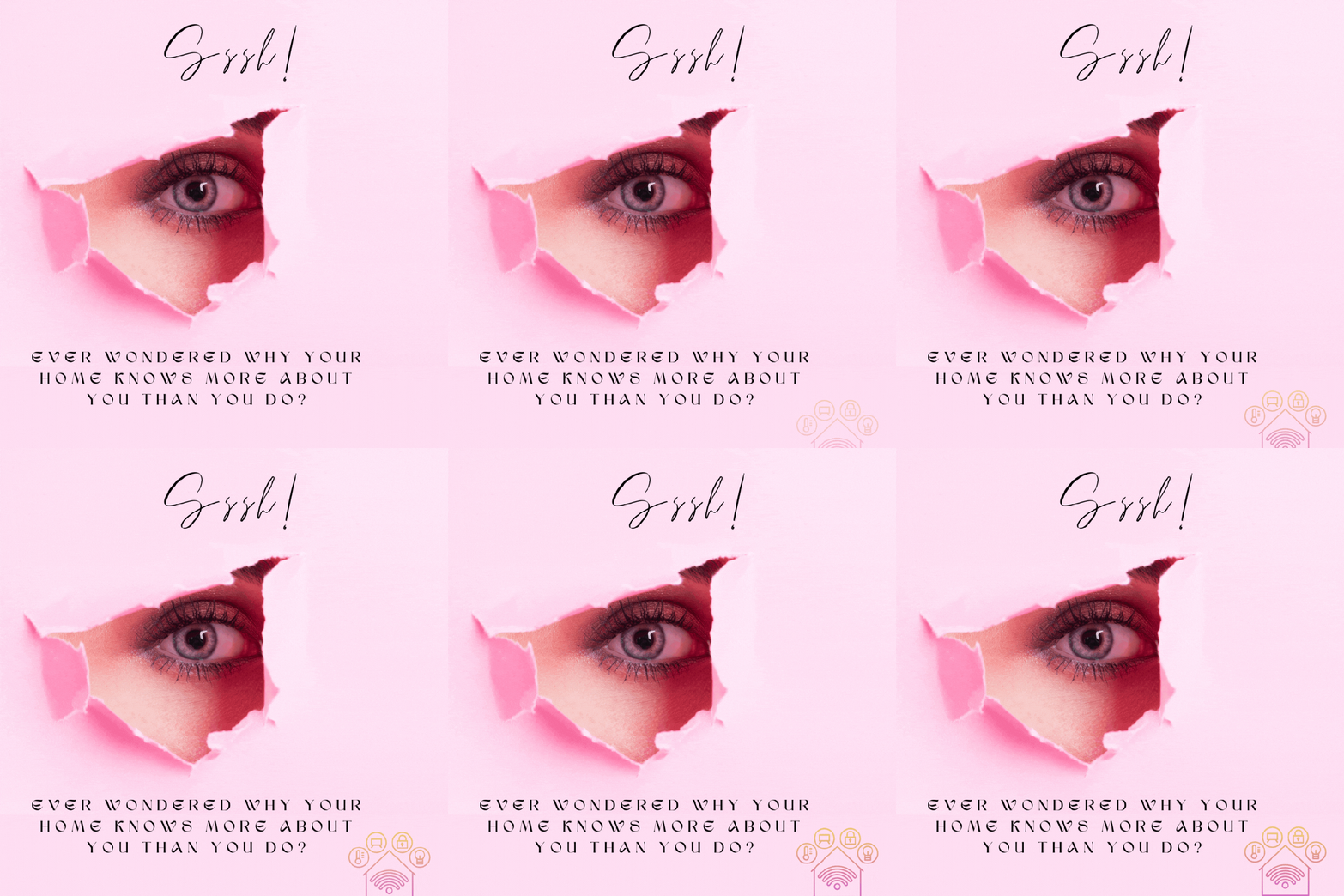
    𝕊𝕞𝕒𝕣𝕥 ℍ𝕠𝕞𝕖 ℝ𝕖𝕒𝕝𝕚𝕥𝕚𝕖𝕤—𝕎𝕙𝕖𝕟 𝕐𝕠𝕦𝕣 ℍ𝕠𝕞𝕖 𝕚𝕤 𝕊𝕞𝕒𝕣𝕥𝕖𝕣 𝕋𝕙𝕒𝕟 𝕐𝕠𝕦

    The real kicker: even when you switch your devices to flight mode or whisper about your deepest secrets near your smart TV, your home is listening.

    • ⍴һ᥆ᥒᥱs & smᥲr𝗍 ძᥱ᥎᰻ᥴᥱs

    Voice assistants (Siri, Alexa, Google) continuously wait for wake words and can capture ambient audio. Whether or not a recording is made, the data often gets used to build targeted advertising profiles.     

    smᥲr𝗍 𝗍᥎s & 𝗍rᥲᥴk᰻ᥒg

    Smart TVs often employ Automatic Content Recognition (ACR)—tracking what you watch and feeding data back to advertisers. Disabling features and reviewing privacy settings helps, but awareness is rare.   

    ᥴr᥆ss-ძᥱ᥎᰻ᥴᥱ 𝗍rᥲᥴk᰻ᥒg & ᥙᥣ𝗍rᥲs᥆ᥒ᰻ᥴ ᑲᥱᥲᥴ᥆ᥒs

    Your smart TV can emit inaudible audio beacons, which are picked up by your smartphone. This enables advertisers to connect your TV habits to your phone profile even if you never interact. Some 234 apps have abused such methods.  

    Let’s leave Thomas for a moment and zoom out to the bigger picture—the children. Because the irony is almost poetic: the same world that allows a grown man to click “Yes, I’m over 18” and browse without consequence is the world where pre-teens, some not even ten, are already public figures, catalogued, followed, monetised. Their lives, their images, their very existence online scrutinised, commented on, ranked.

    And where do these Thomas-types gather? Telegram groups, WhatsApp channels, corners of Vinted, Instagram threads. Anywhere, really, where the digital veil makes them feel untouchable. Boys and men who snap photos in parks, in bushes, anywhere private life intersects with public space, and then post or trade those images like currency.

    It’s not just theory. In Germany, there was a recent incident: a young woman on TikTok caught a man hiding in the bushes, camera in hand, photographing women and children in a lake. When confronted, he panicked—deleted the photos, or at least pretended to but anyone familiar with digital tricks knows deletion rarely means eradication. Trash folders, backups, hidden archives: the game is sophisticated, the predators are trained. This is the cold, unromantic truth: the “anonymous” man is a fiction. The digital world isn’t neutral; it’s a panopticon. Every child, every teen, every influencer under ten is feeding the same machine that Thomas thinks only monitors him. His “safety” is an illusion, their exposure a currency. And when the illusion collapses, the consequences aren’t abstract they are tangible, immediate, and often horrifying. We will expand this discussion next time: child influencers, their exploitation, and how our culture profits from the visibility of the very young. But the warning is already clear: digital shadows are fragile. Privacy is a performance. And the world hyper-connected, hyper-aware—is waiting to catch the blind, the careless, and the entitled.

    𝕊𝕥𝕚𝕝𝕝 𝕥𝕙𝕚𝕟𝕜 𝕔𝕒𝕤𝕙 𝕞𝕖𝕒𝕟𝕤 𝕒𝕟𝕠𝕟𝕪𝕞𝕚𝕥𝕪? 𝕋𝕙𝕚𝕟𝕜 𝕒𝕘𝕒𝕚𝕟.

    When was the last time you bought a TV? One that lasted more than a couple of years? Remember the days when a vacuum cleaner could be passed down through generations? Those days are gone. We’re outsourcing our chores to robots—robots that listen, watch, and learn more than we realise.

    Your fridge knows when you’re out of milk. Your car predicts your next move before you do. And your smart speaker? It’s been eavesdropping on your conversations for years.

    Yet, we still cling to the myth that paying in cash shields us from surveillance. But what about the digital breadcrumbs we leave behind? The apps we use, the devices we connect, the data we share without a second thought?

    Governments are already accessing our data. In the UK, the Information Commissioner’s Office (ICO) is stepping up to enforce privacy rights, but the damage is done.

    So, what’s your move? Will you continue to live in denial, or will you take control of your digital footprint?

    It’s time to wake up.

    For further reading on digital privacy and surveillance:

    Is your air fryer spying on you?

    Makers of air fryers and smart speakers told to respect users’ right to privacy

    British novelists criticise government over AI ‘theft’

    Hinterlasse einen Kommentar

Frau Mutter Renate

Vintage Feministisch, Von eine Frau für Frauen, weibliche Gesundheit, die Zukunft ist weiblich, women health, mental health, self growing, Woman life style, feminin, koscher , halal

Zum Inhalt springen ↓