( Two Paths – Dame Drawer )

“𝓐𝓷 𝓲𝓷𝓭𝓲𝓿𝓲𝓭𝓾𝓪𝓵’𝓼 𝓯𝓻𝓮𝓮𝓭𝓸𝓶 𝓲𝓼 𝓸𝓷𝓵𝔂 𝓪𝓼 𝓮𝔁𝓽𝓮𝓷𝓼𝓲𝓿𝓮 𝓪𝓼 𝓽𝓱𝓮 𝓼𝓽𝓻𝓾𝓬𝓽𝓾𝓻𝓮 𝓸𝓯 𝓼𝓸𝓬𝓲𝓮𝓽𝔂 𝓹𝓮𝓻𝓶𝓲𝓽𝓼.”
– 𝓹𝓪𝓻𝓪𝓹𝓱𝓻𝓪𝓼𝓮𝓭 𝓯𝓻𝓸𝓶 𝓖𝓻𝓾𝓷𝓭𝓻𝓲𝓼𝓼𝓮 𝓭𝓮𝓻 𝓚𝓻𝓲𝓽𝓲𝓴 𝓭𝓮𝓻 𝓹𝓸𝓵𝓲𝓽𝓲𝓼𝓬𝓱𝓮𝓷 𝓞̈𝓴𝓸𝓷𝓸𝓶𝓲𝓮, 𝓚𝓪𝓻𝓵 𝓜𝓪𝓻𝔁
A few months ago, we talked about Monique and Aisha — both my friends, both with a past that could break anyone, yet both remarkably different. Monique, theoretically innocent of any criminal record, had worked in escort. Aisha, similarly, but with her own struggles — flirtations with drugs and a slight aggression issue. And yet, we remain friends. Why bring this up? Because they recently dreamed of Turkey. A fresh start. Leave the past behind. But here’s the bitter truth: both are marked — branded by the system. Let’s start with Monique. Years ago, she and a group of about ten German-speaking women — the rest were Hungarian or Romanian and couldn’t participate — were confronted by Kripo officers late at night on Kurfürstenstraße. These officers demanded IDs, pushed women into cars, forcibly searched bags, and photographed documents — all illegal, all humiliating. Monique, fully aware of her rights, refused to show her ID to men who could not prove theirs. She insisted the officers first legitimise themselves, as legally required. They did not appreciate this. She was shoved against a street sign, her bag and documents were forcibly seized and inspected, and her dignity stripped. Seeking help, the group turned first to Olga Café in Berlin, supposedly a sanctuary for women. Reality? Olga flatly refused assistance, claiming legality on her side. Then they went to Neustart, led by Gerd Brummen, who at least attempted to support the women, raising concerns that this behaviour was excessive and illegal. Letters were written, complaints lodged, barricades metaphorically raised — yet the system remained unmoved. Years later, Monique set off to travel. First stop: London, for a vintage conference — her obsession with retro fashion outweighing any caution. The first line she heard at the airport? “Prostitution is not legal in this country.” She barely registered it. She was twenty, young, Polish, and apparently that alone was enough for suspicion. Then, France. Here, she faced absurdity: the officer insisted she needed a visa to move around Europe because she came from Poland. Monique, incredulous, asked Siri, confirmed Poland’s EU and Schengen membership, and pointed it out. The officer, flummoxed, had no words. Miraculously, it was the only polite airport interaction she experienced on her route through Germany and France. Israel was worse. There, an official insisted she was a prostitute, despite her proof of legitimate work at a hotel’s housekeeping service. He refused to believe her, demanding repeated demonstrations and verification, treating her like an object for booking rather than a human being. Monique had no criminal record. Never had. Her only “crime”? Knowing her rights. The repeated humiliation, body checks, and aggressive treatment at borders were her penalty. At one point, when she considered legal counsel, she asked: Do I need a lawyer? Am I under suspicion? That question alone, asked in fear, captures the absurdity of her reality. After Monique, let’s turn to Aisha. She started working on the street at eighteen — escort work, young, vulnerable, yet coming from a relatively good family. At eighteen, she was engaged to a man she loved deeply. The tragedy is, he persuaded her — over weeks, months — to give herself to him while still a virgin. After that, he abruptly ended the engagement, citing her “loss of virginity” as reason, declaring he would never marry her. This left Aisha shattered. Suicide attempts followed, and soon, heroin and other destructive choices became her companions. Her father intervened multiple times, taking her to Turkey for detox clinics, trying to guide her toward a normal life. But the attempts failed. She ran, flew to Morocco with clients, spiralled further, and eventually landed in prison for one or two years. It was after prison that she returned to work on the same street where Monique had been. Their paths crossed in a curious way: a man who had rented Monique a room told Aisha that Monique had stolen her expensive makeup while Aisha stayed there for two weeks. Naturally, he framed it as if Monique had wronged Aisha. What neither of them knew at first was that they would confront him together — and in doing so, they became friends. Both were independent, both unafraid of confrontation, and the man had unwittingly set them up to ally rather than fight. Here is the crucial contrast: family support. Aisha’s family, despite her missteps, had her back. They provided help, resources, intervention, even love when she faltered. Monique, in contrast, navigated life largely alone, without the buffer of familial safety nets. Aisha’s descent into drugs or escort work was not a reflection of being unloved or ignored. It was a combination of naivety, poor decisions, and manipulation by a bad partner — proof that trauma, self-destruction, or marginalisation can strike anyone, even from a “good home.” This is where the system sees no difference. Whether you are alone like Monique or surrounded by family support like Aisha, the mark is still there. The bureaucracy, the stigma, the suspicion — it doesn’t distinguish. It cares only that you existed in a way that challenged or intersected its invisible rules.
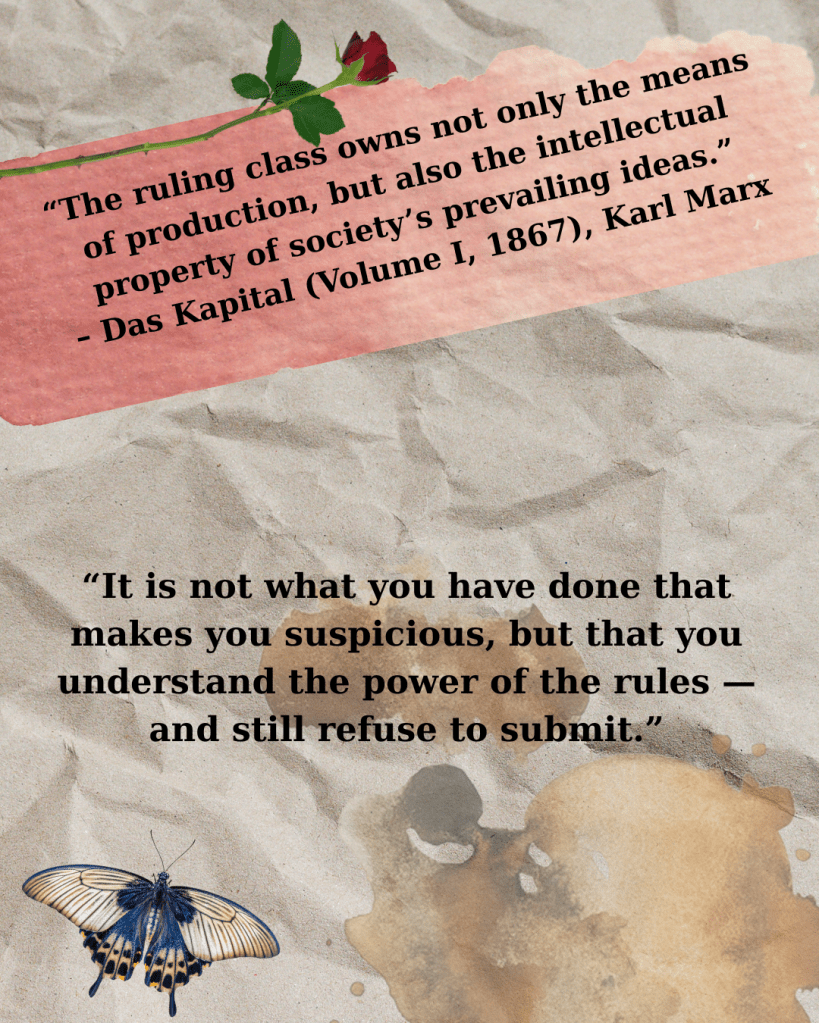
Monique and Aisha, though bound by past experiences, could not have been more different in their daily lives. Monique was always punctual — the very definition of it, actually. Aisha, on the other hand, measured punctuality by her own clock: if she turned up that day, she was, in her mind, on time. Over the years, their paths diverged. Aisha remained in Berlin, rooted, continuing friendships with the same women she had known on the street. Monique, restless, kept searching: new jobs, applications, trial days — ever trying to find her footing. Until Corona arrived, shutting down Germany, leaving little to do beyond shopping. During that time, Monique chose a different path: ecology, economics, self-education. She spent more time with Germans, learning, observing, evolving.
Meanwhile, Aisha became pregnant, yet continued on a path most would call reckless for an expectant mother. And still, somehow, her child was born healthy — a testament to her resilience. Monique, in contrast, fell into a toxic relationship. What began well escalated quickly: her partner turned violent. Monique was forced to flee her own apartment, only to find the police refusing to take her report. When she demanded justification, she was told, bluntly: “He is German, you are Polish. If a German beats someone, he will not be imprisoned.” That moment crystallised everything. Monique left Germany.
The contrast between the two women extended to even trivial matters. Aisha mocked Monique’s eco-consciousness, calling her an “Eco-Freak,” while Monique quietly observed how far Aisha had yet to fall. Their clashes became frequent; lifestyle, choices, and circumstances were now poles apart.
Yet their friendship persisted — tenuous, combative, yet somehow enduring. Monique, walking a path of self-education and ecological awareness, and Aisha, navigating the storms of motherhood and streetwise survival, remained tethered by shared history. But history, as always, is a complicated, inconvenient guide.
While Monique faced new challenges back in Poland, Aisha remained in Berlin, navigating the supported housing system that doubted her capacity to be a mother. Monique had bet everything on rebuilding her life, yet even she couldn’t initially trust that Aisha could handle motherhood. Over time, however, Aisha began to change in small, meaningful ways: buying unpackaged goods, choosing organic food for her daughter, and embracing practices Monique had once considered eccentric. Monique started to see that her friend’s choices were not recklessness, but emerging wisdom. At the same time, Monique confronted harsh realities. Two Kripo officers, years earlier, had reacted to her knowledge of her rights with hostility. Her refusal to comply with arbitrary demands had not gone unnoticed; it had left a mark in the system. Though she had committed no crime, the authorities’ notes labelled her as “uncooperative” or “resistant,” effectively marking her as a potential risk. The bureaucratic machinery does not differentiate between actual wrongdoing and the perceived threat of independence.
Monique’s record remained clean on paper, but the invisible consequences were real: at airports, border controls, and security checks, her awareness and assertiveness were treated as hazards. This system, designed to enforce conformity, penalised her self-awareness rather than any illegal act. In contrast, Aisha’s history included documented offences — court records, social service oversight, and medical programs — all explainable and justifiable on paper. Yet both women were treated by institutional mechanisms as unpredictable, potentially dangerous, and therefore flagged in internal codes. It was a cruel symmetry. Monique’s suffering had been compounded by the system itself, not only by the men who had abused her. The stigma she carried was not a reflection of guilt, but of her refusal to remain small, compliant, or invisible. Authority, when challenged by knowledge, reacts with resistance; those who refuse to submit are quietly marked, their independence catalogued as risk. And this is where their stories converge: two women, different backgrounds, different actions, both negotiating the consequences of living beyond the rules imposed upon them. Aisha adapted slowly, learning survival within the system, while Monique fought, questioned, and ultimately left the country to reclaim autonomy — proving that understanding the power of rules does not always guarantee safety, but can guarantee recognition of one’s own strength.
While Aisha settled into her new relationship, letting the world take care of itself, Monique focused on action. She began by reaching out to the relevant authorities, navigating a maze of German bureaucracies from her base in Poland. She contacted the Bundeszentralregister (Federal Central Criminal Register) to request her official criminal record, ensuring it was up-to-date and accurate. Then, she turned to the Staatsanwaltschaft (Public Prosecutor’s Office) to inquire about the deletion of outdated or incorrect entries in police information systems, particularly those that flagged her as “resistant” or “uncooperative” despite her clean record.
Monique meticulously documented every step, noting dates, correspondences, and the officials she spoke to. She explored her legal rights: under German law, she was entitled to challenge information held against her if it was false or irrelevant. Even while living abroad, she could initiate requests for verification and deletion of incorrect entries. The process required patience and persistence, but for Monique, each step was a reclaiming of autonomy — a tangible way to translate knowledge into empowerment.
Meanwhile, Aisha remained focused on daily survival: managing her daughter, negotiating housing, and adapting to the system’s constraints. Both women shared the dream of leaving Europe and starting anew, possibly in Morocco, but only one of them had committed to concrete action to change her circumstances. For readers who may find themselves in similar situations — facing systemic misunderstanding, stigma, or bureaucratic barriers — Monique’s approach offers a practical blueprint:
1. Verify your records – request your official criminal record or equivalent from the relevant authority.
2. Identify flags or entries in police or government information systems.
3. Understand your legal rights to challenge or request deletion of incorrect or outdated information.
4. Document every step – keep correspondence, note dates, names, and reference numbers.
5. Persist – these processes take time, but consistent action can yield tangible results.
And so the question remains, not just for Monique and Aisha, but for anyone reading this:
If you were in their position, facing a system that penalises awareness and rewards compliance, what would you do? Would you act like Monique, mapping out your rights and challenging every unjust encounter? Or would you adapt like Aisha, working within the system and accepting its limits?
Write your answer in the comments — reflect, choose, and share. The system may be rigid, but awareness and action are always yours to claim.
( For those curious about how Monique’s requests are progressing, or if you want practical tips on navigating similar situations, feel free to reach out. You can leave a comment, message me directly, or contact me via Instagram or Facebook. Your questions are welcome — let’s make this a conversation. )

Hinterlasse einen Kommentar