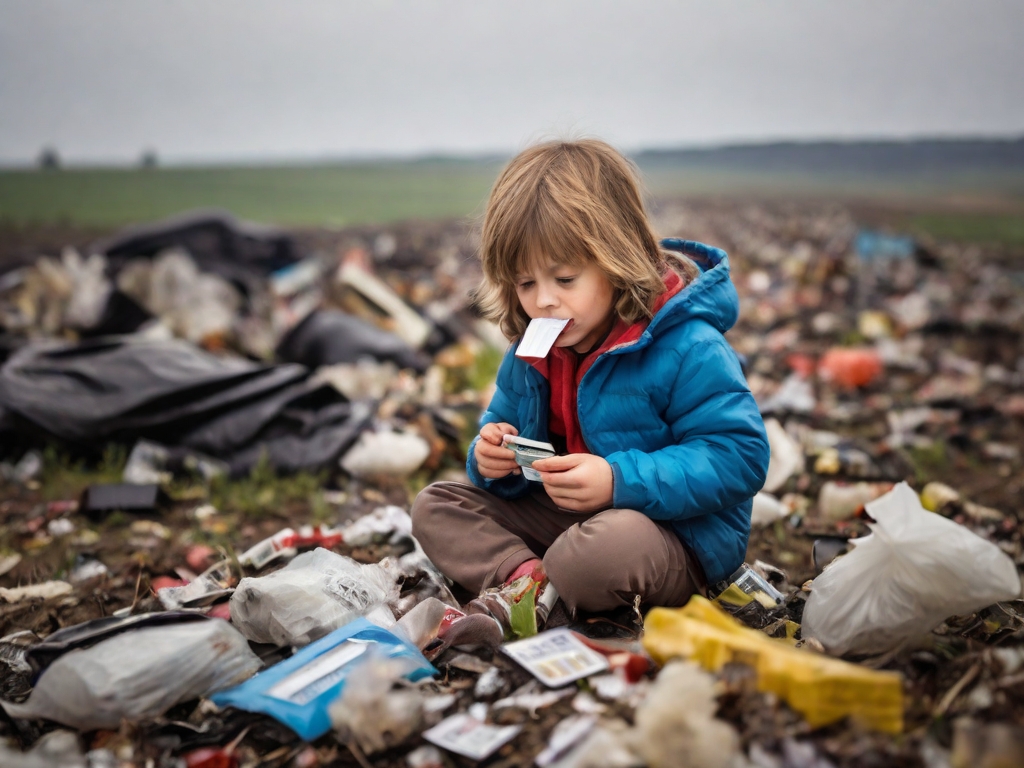
✿ 𝔓𝔩𝔞𝔰𝔱𝔦𝔠, 𝔢𝔳𝔢𝔫 𝔦𝔫 𝔱𝔥𝔢 𝔞𝔯𝔪𝔰 𝔬𝔣 𝔟𝔞𝔟𝔦𝔢𝔰: 𝔞 𝔯𝔢𝔞𝔩𝔦𝔱𝔶 𝔱𝔥𝔞𝔱 𝔭𝔬𝔩𝔩𝔲𝔱𝔢𝔰 𝔬𝔲𝔯 𝔴𝔬𝔯𝔩𝔡. ✿
Bobo, in his pursuit of perfection, gifted Baba with all kinds of plastic boxes, bottles, and accessories. He believed these little tokens of convenience would make her life better—plastic earrings, colorful armbands, and a home filled with modern plastic items. Baba, looking out the window with a smile, appeared to be content. But behind the façade, some of the seemingly innocent plastic items came with hidden consequences. A few of the cute plastic bottles Baba was so fond of contained medicine, a quick fix for the housewife’s stress and depression, a common issue during the 1950s. These quick solutions masked deeper problems.
Though Bobo thought he had the perfect wife, Baba was struggling with more than just housework. As they picnicked together with plastic plates, plastic knives, and beautiful plastic cups, all seemingly innocent, Baba was unknowingly becoming part of a cycle of plastic consumption that would affect more than just her. Even their son, Bubu, would soon be part of this plastic-laden world.
Bubu, though young, was already absorbing microplastics through the toys he loved to chew on. His colorful plastic toys were a big part of his childhood, part of the “modern” world that his parents had embraced. Fast forward, and Bubu had his own children, continuing the cycle. His babies, already surrounded by new plastic technologies, were born into a world of pervasive plastic. And so the cycle of plastic consumption and its consequences continued, hidden in plain sight.
As the years passed, Bubu’s children, now known as BBs, grew up in a world far beyond what their parents could have imagined. The world of plastic had evolved, and so had the ways it infiltrated every corner of life. The BBs were born into a world where microplastics had become an undeniable part of their daily existence, not just in toys, but in everything—from the food they ate to the clothes they wore. Sunscreens, once thought to be a simple protection from the sun, now contained plastic particles that entered their bloodstream every time they went outside. Cosmetics, marketed as a must-have for ‘perfect’ beauty, were laden with microplastics, offering a fleeting ideal that left behind a dangerous legacy.
The rise of fast fashion, with its cheaply made clothes and mass-produced trends, meant that plastic and synthetic fabrics were now part of their everyday attire. The once-pristine wardrobes of Bobo and Baba’s era had now been replaced by cheap, disposable clothing designed to be worn once and thrown away. The BBs, growing up surrounded by the digital revolution—smartphones, tablets, and laptops—were constantly exposed to plastic, not just in their homes but also through their screens. The cycle of consumption had gone beyond physical objects and extended into the digital world, further connecting them to a plastic world they couldn’t escape.
The BBs didn’t realize the extent of the damage that plastic was doing to their world. The small microplastics they ingested daily, the clothing they wore, the beauty products they used—all contributed to a legacy of pollution that had already seeped into the oceans, the air, and the soil. Yet, they were caught in a cycle of ‘buy more, consume more,’ unaware of the true cost of their actions.
Then, BAM! A headline in Medium catches their eye: ‘We Consume Plastic: Pollution Everywhere.’ The BBs, realizing the gravity of the situation, began to rethink their lifestyles. They searched for alternatives, hoping to find a way out of the plastic maze. But each search led to more alarming news. Studies revealed that chewing gum releases microplastics into the mouth, with some pieces emitting up to 637 particles per gram. The average person unknowingly consumes a significant amount of plastic each year. In fact, it’s been estimated that we ingest the equivalent of one credit card’s worth of plastic annually, highlighting the hidden dangers of a plastic-saturated world. For a family of four, the plastic footprint is even more staggering. Despite its seemingly innocent form, plastic is now embedded in nearly every product we use—from food packaging to clothing and even cosmetics. This modern convenience comes at a cost: our health, the environment, and, increasingly, our wallets.
The BBs were confronted with the harsh reality: their daily lives were deeply intertwined with plastic. The sunscreen they applied, the cosmetics they used, and the fast fashion they embraced—all contained microplastics. The very items designed to protect and beautify were contributing to the pollution crisis. The BBs felt overwhelmed, realizing that the world they had inherited was burdened with the consequences of unchecked plastic consumption. The news was grim, and the path forward seemed uncertain.
After the news hit, the BB group began to rethink their lifestyles, trying to find ways to live more sustainably. The first family, with only one child, became increasingly obsessed with retro aesthetics from the 1950s and 1960s. They took pride in their vintage-style home, complete with second-hand furniture, retro appliances, and old-fashioned decor. They found themselves striving for a zero-waste lifestyle, often participating in challenges to reduce waste in their daily routines. The stay-at-home mom in this family, with more time on her hands, educated herself on sustainable practices like zero-waste cleaning and reducing packaging. She embraced natural, eco-friendly materials like bamboo, glass, and plant-based packaging—using as little plastic as possible. However, despite their best efforts, perfection was hard to achieve, and the family acknowledged that some things just didn’t work as smoothly as they had hoped. Yet, they found joy in the little victories, like reusing old glass jars and buying in bulk without packaging.
In contrast, Family B, with two children, faced greater challenges in adopting similar practices. The parents both worked full-time to keep up with the rising costs of living and support their growing children. With two kids in tow, it was hard for them to dedicate enough time to consider more sustainable options. Their grocery shopping was often done in discount stores, where packaged food was cheaper, and the time and effort to seek out eco-friendly alternatives simply didn’t seem feasible. The family did what they could—sometimes buying eco-friendly options when possible—but the cost of fresh, organic produce or plastic-free goods was often out of their budget. While Family A could afford to shop once a month at local eco-friendly farmers’ markets and grow their own produce in the backyard, Family B relied on more conventional shopping methods.
The mom in Family A, being able to stay home, had more time to dedicate to learning about eco-friendly practices. She also found creative ways to bring in extra income by promoting fair trade products and sharing tips on sustainable living online, often posting about how she reused old household items or made eco-friendly DIY projects. She was even able to homeschool her child, giving them a tailored education that focused on sustainability and hands-on learning. Meanwhile, Family B’s children went straight into the school system, as both parents were tied to their nine-to-five jobs and couldn’t afford the time for homeschooling.
Both families were well-educated. The parents had degrees, some in economics or medicine, which had landed them in middle-class jobs. But education in these fields didn’t necessarily translate into knowing how to create a truly sustainable lifestyle. While Family A’s parents had more time to learn and implement ecological solutions, Family B was stuck in the cycle of working long hours just to meet their financial obligations. Family A could afford to focus on zero-waste practices because they had the privilege of time and a stable financial situation. Family B, on the other hand, had to juggle work, child-rearing, and paying the bills, which left little room for perfect eco-friendly solutions.
It was clear: in a society where time and money were constantly in demand, adopting an eco-conscious lifestyle was often easier for families with fewer children. The more kids, the more financial strain, and the less time there was to focus on sustainability. This disparity highlighted a crucial issue—how do we balance ecological responsibility with the demands of modern life?
As Family A continued their journey toward minimizing their ecological footprint, they became more and more aware of the ways in which they were still inadvertently contributing to plastic pollution. They focused on reducing waste, reusing glass containers, and embracing natural packaging like bamboo and banana fibers. However, despite their best efforts, they couldn’t escape the broader issue of plastic. The fact remains that plastic continues to flood our oceans at an alarming rate. Every year, millions of tons of plastic enter the oceans, with an estimated 8 million metric tons of plastic waste being dumped into marine ecosystems annually. It’s not just about single-use plastics; the rise of fast fashion has also played a major role. Clothing production alone accounts for a significant portion of plastic waste, with millions of garments made from synthetic fibers like polyester, which shed microplastics when washed.
Family A tried to combat this by buying second-hand clothing, focusing on vintage styles, and reusing everything they could. Yet, they were still surrounded by a world awash in plastic. And, as much as they tried to cut down on their consumption, even the clothes they wore, the packaging that came with food, and the products they used at home contributed to their plastic footprint. It’s a difficult cycle: while they were doing their best to reduce their impact, the reality was that a lot of their efforts still couldn’t prevent plastic from creeping back into their lives.
Family B, on the other hand, faced even greater challenges. Despite their awareness, they still found themselves struggling to make time for eco-friendly practices. Both parents worked full-time jobs just to make ends meet, leaving them with little time or energy to cook fresh meals or research sustainable options. The convenience of fast food and pre-packaged meals became their go-to option, often bringing even more plastic into their lives. The father, who had been working long hours in high-stress jobs, began to notice strange health issues. Blood tests revealed alarming results—his blood was filled with microplastics, a sign of how deeply plastic had infiltrated his body. The discovery wasn’t just limited to his blood; even in his tissues and organs, plastic had taken root, contributing to allergies and making him increasingly sensitive to certain foods and environments.
But the shock didn’t end there. When Family B’s third child was born, further testing revealed a truly shocking truth: microplastics had crossed into the placenta. Their newborn, just entering the world, was already affected by the pollution that had accumulated over generations. This was the harsh reality of living in a world where plastic had become so deeply entrenched that even the unborn were affected.
Despite their best efforts to limit plastic use, Family B, like so many others, found themselves trapped in a system that made it almost impossible to avoid. With two children to care for, demanding jobs, and little time to cook from scratch, they were unable to avoid plastic, especially when it came to food packaging and household products. This exhaustion, coupled with the relentless pressure to work and support their family, led them down the path of convenience—using plastic-wrapped food and disposable items to make life just a bit easier.
The lesson here is clear: even with the best intentions, the modern world is overflowing with plastic, and the consequences are not only environmental but deeply personal. Whether it’s the ocean’s growing plastic islands, the microplastics found in fish, or the synthetic fibers used in our clothing, plastic is everywhere. Only about 20% of the plastic we use gets recycled, and the rest? It either ends up in landfills, the ocean, or, as we’ve seen, in our bodies.
As Family A continues to strive for a more eco-friendly lifestyle, they are reminded that there is no easy solution. They know that plastic will always be a part of their lives in some form. However, they take comfort in their efforts to be more mindful—whether it’s reducing waste, supporting fair-trade businesses, or simply using less. It’s not about perfection, but progress. They continue to share their journey with others, hopeful that by being conscious of their consumption, they can make a difference, however small.
Ultimately, the situation with Family B paints an even starker picture. The reality of microplastic in the placenta and in the blood of the father is a wake-up call that no one can afford to ignore. The plastic crisis is not just an environmental issue anymore—it’s a health issue, affecting everyone, even the youngest and most vulnerable among us. The pressure of modern life, the need to consume, and the need for convenience has led to a situation where we are all affected by the very things we once thought were out of our control.
At the end of the day, both families remind us of the struggle we all face. No matter how hard we try to avoid plastic, it seems that we are always confronted with it. But by being mindful of what we consume, making conscious choices, and continuing to educate ourselves and others about the consequences of our actions, we can begin to shift the tide. There will be no perfect solution, but each mindful choice can lead to a better, healthier future—not just for us, but for the generations to come.
The plastic crisis is no longer a distant problem—it’s here, affecting our bodies, our families, and our planet. It’s easy to feel overwhelmed, but each small step counts. Whether it’s reducing plastic waste, supporting sustainable brands, or simply being mindful of your consumption, we all have a part to play. Join the conversation, share your journey, and let’s work together to create a future where our children don’t inherit the plastic pollution we’ve created. Start by making one change today—what’s one thing you can do to reduce plastic in your life?

Hinterlasse einen Kommentar